Hopp til innhold

Norsk nettbutikk | Rask levering | Frakt i hele Norge
Studio

iConnectivity PlayAUDIO1U ...

15.790,-

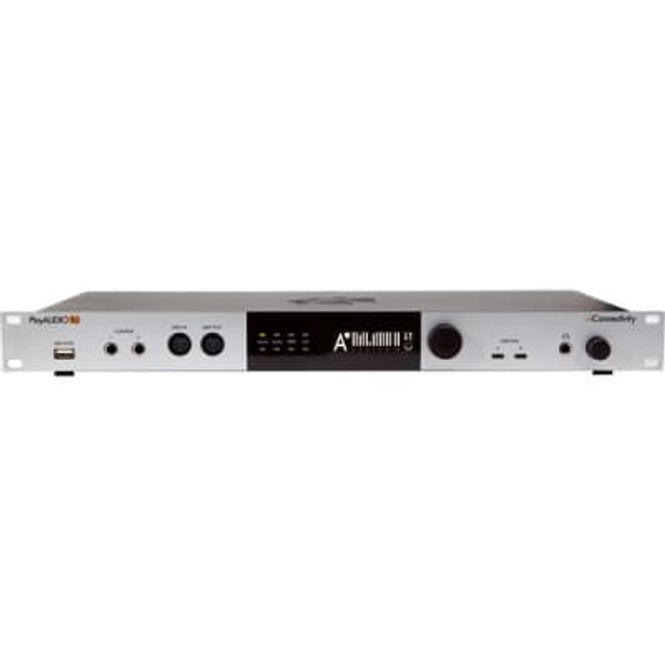
PlayAUDIO1U Audio and MIDI Interface for Live Performance PlayAUDIO1U is designed to support live performances at the professional level. It is a deeply-thought out, bulletproof, fail-proof, and made-to-tour interface that provides pristine audio output as well as comprehensive MIDI connectivity to your whole stage. It’s perfect for control and playback of backing tracks, virtual instruments, or most anything else you can think of that requires computers in a live environment. Layers of protection Being built to tour means that even the little details get thought of. PlayAUDIO1U fail-proofs your show by employing iConnectivity’s famous multi-computer redundancy. It listens to your software and when issues occur it automatically switches computers faster than anyone can hear. It does this by listening to either (or both) MIDI or audio coming from your computer. PlayAUDIO1U introduces a new type of protection with your performance. In addition to listening for software or computer failure, it can listen to the audio streams coming from your computers and through itself. At the slightest hint of an audio problem, it can mute the audio to the main outputs and provide diagnostic information to the operator via its display. This helps protect everyone from bad audio, noise, etc. from passing through the outputs and into the PA system, Monitors, etc. The PlayAUDIO1U Display - your virtual assistant  Like your own virtual assistant, the display provides information about what is happening in your world. Enjoy real-time information such as MIDI monitoring and audio levels. The display will also provide you with warnings if computers fail or if there are issues elsewhere in the system.  With PlayAUDIO1U’s display, getting setup properly and/or diagnosing problems has never been faster or easier. Made to tour! 12 Panel reinforced XLR outs: The rear of PlayAUDIO1U is ready for your performance. Plug it right into your snake, loom, or stage box and go. Also, the XLR jacks are reinforced by the chassis, making them stand up better to the rigors of the road. 1U Rackmountable chassis: Pop the PlayAUDIO1U into your rack or use it alone. It is super flexible. Switching onboard power with IEC connector: No wall warts needed! Switching100v - 220v 50-60hz with IEC connection makes PlayAUDIO1U compatible throughout the world! Just plug PlayAUDIO1U in and go. PlayAUDIO1U is a MIDI maniac At iConnectivity, we’re been the world leaders and innovators in MIDI connectivity for years now. We’ve put everything we know about MIDI in live performance into the PlayAUDIO1U. PlayAUDIO1U can act as your chief MIDI manager for your live performance. Connect devices via its built-in 5 pin MIDI Din, USB host port, connected computers, and even on the network via RTP MIDI. Once everything is connected, It lets you tailor what MIDI goes where and when. For instance, iConnectivity’s powerful MIDI processing lets you easily send MIDI to connected computing devices while only sending one set of program changes to connected peripherals, send all notes off when computer failure occurs to avoid stuck notes, filter out extraneous CC’s, and much much more… It’s a MIDI beast. iConnectivity’s famous flexibility is built-in. Key features 12 Balanced panel reinforced XLR outputs Integrated +48v phantom power resistance on outputs protects your interface from accidental damage when plugging directly into consoles or stage boxes (please note we cannot guarantee 100% protection indefinitely. It is best practice not to send +48v phantom power into any audio interface’s outputs) 1x 1/4” TRS stereo headphone output with dedicated control for convenient headphone monitoring USB MIDI host port, offering up to 8 ports worth of USB MIDI for Class Compliant controllers and/or modules DIN-MIDI port built-in (1 in 1 out) Ethernet MIDI with 22 ports of connectivity for rugged long-distance MIDI connections Comprehensive audio mixing and routing between connected USB computing devices and analog outputs Easy-to-use capacitive touch control and 2 rotary encoders provide software-less control over PlayAUDIO1U’s key features from the front panel 100-240v switching power built-in with Industry-Standard IEC Power Connection 2x USB C type ports for connecting computing devices Automatic and manual computer switching modes, for lightning-fast switching between connected computers 2x 2 button  “Control” footswitch selectable input/outputs can be mapped to MIDI functions, control over numerous functions on the interface and/or sending control messages to compatible devices Audio Protection helps stop unwanted noise from corrupt audio sources/files from making it into the audience Auracle software enables you to tailor the PlayAUDIO1U’s settings to your exact needs High-resolution audio - Studio sound quality for the live arena - up to 24-bit/96kHz AD/DA conversion “MIDI learn” from external MIDI devices to control key functions on the interface OLED screen for instantaneous status information and precise control 1U ready-to-tour rack-mountable chassis   The features of PlayAUDIO1U are patented and patent pending. See www.iConnectivity.com/patents for more information. Product features are subject to change. iPad, iPhone, and iPod touch are trademarks of Apple Inc., registered in the U.S. and other countries. iConnectivity, iConnectMIDI, PlayAUDIO, iConnectAUDIO, ConnectAUDIO and Audio passThru are trademarks of iKingdom Corp. Copyright (c) iKingdom Corp. 2023 What's in the box 1 PlayAUDIO1U Audio + MIDI interface 2 USB-C to USB-C cables 2 USB-C to USB-A type adapters 1 Each - Type B, G, and F type IEC power cables. Bundled software & sounds Big Fish Audio is a developer and distributor of premium virtual instruments, samples, and loop content. iConnectivity is proud to include a special sampler of Big Fish Audio samples and loops that's perfect to jumpstart or augment your production when you register your iConnectivity audio interface. Ableton Live Lite is a fantastic music creation software and also live performance tool. Ableton Live Lite is available upon registration of your PlayAUDIO1U.
IsoAcoustics ISO-130 ...

1.149,-

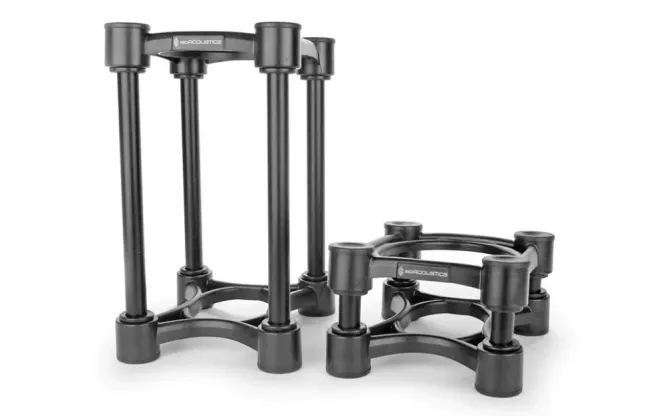
ISO-130 Isolation stands for small speakers and studio monitors The ISO Stands is the latest generation of IsoAcoustics stands designed for studio monitors. The ISO Stands are an updated version of the popular ISO-L8R series and features a lower profile, new frame design and a newer version of isolator for improved performance. The ISO-130 isolation stands are the smallest stands within the ISO Stands family. Offering 14 variations of height and tilt, the ISO-130 will help you optimize the placement of your monitors and bring your tweeters to ear level. The IsoAcoustics patented isolation system provides superior isolation and decoupling from the supporting surface. The stands are biased to keep all energy in alignment with the listening position, providing greater clarity and focus. Specifications Dimensions Short Setting (WxDxH) 5.1” x 6” x 2.8 (130mm x 152mm x 71mm) Dimensions Tall Setting (WxDxH) 5.1” x 6” x 8.25 (130mm x 152mm x 210mm) Tilt up to 6.5 degrees Weight Cap 20lbs (9KG) Quantity 2 Stands (1 Pair) Optimize speaker placement and focus An important aspect of the speaker stand design is the ability to adjust the height and tilt angle of the supported speaker enclosure to optimize its position relative to the listener and eliminate soundwave reflections off the supporting surface. In a typical Desktop Audio Workstation (DAW) configuration, the listener is positioned 3 to 4 feet from the monitors with ear level approximately 20″ above the work surface. Raising and tilting the monitors to the optimum position can be achieved in these circumstances using the IsoAcoustics stands. Exciting the supporting surface The isolators manage the energy of the speaker to reduce vibrations resonating through the supporting surface to eliminate dissonant sounds in the listening area or joining rooms. Reducing internal reflections Internal reflections are vibrations reflecting back up the speaker cabinet which causes smear. Smear is a result of artifacts replicated in both channels which are perceived to be in the middle, causing the stereo image to collapse. The IsoAcoustics isolators reduce internal reflections to eliminate smear. The result is an improved stereo image of natural spatial sound.
IsoAcoustics ISO-155 ...

1.390,-

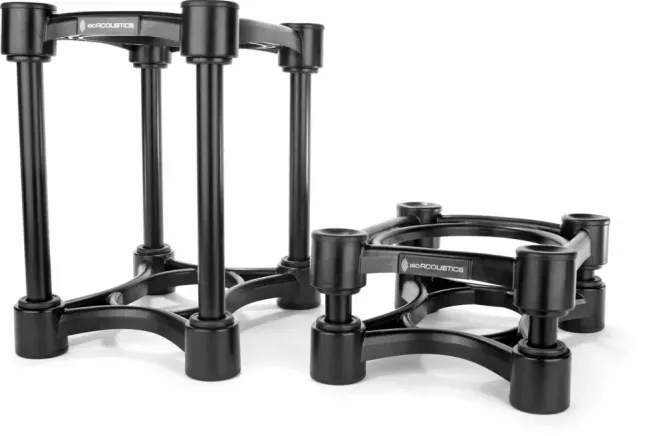
ISO-155 Isolation stands for medium sized speakers and studio monitors The ISO Stands are the latest generation of IsoAcoustics stands designed for studio monitors. The ISO Stands are an updated version of the popular ISO-L8R series and features a lower profile, new frame design and a newer version of isolator for improved performance. The ISO-155 isolation stand is 6.1” (155mm) wide x 7.5” (190mm) depth and is rated for monitors weighing up to 40lbs. Offering 14 variations of height and tilt, the ISO-155 will help you optimize the placement of your monitors and bring your tweeters to ear level. The IsoAcoustics patented isolation system provides superior isolation and decoupling from the supporting surface. The stands are biased to keep all energy in alignment with the speaker cones, providing greater clarity and focus. Specifications Dimensions Short Setting (WxDxH) 6.1” x 7.5” x 3 (155mm x 190mm x 76mm) Dimensions Tall Setting (WxDxH) 6.1” x 7.5” x 8.2 (155mm x 190mm x 210mm) Tilt up to 6.5 degrees Weight Cap Short setting 40lbs (18KG) Weight Cap Tall setting 35lbs (16KG) Quantity 2 Stands (1 Pair) Optimize speaker placement and focus An important aspect of the speaker stand design is the ability to adjust the height and tilt angle of the supported speaker enclosure to optimize its position relative to the listener and eliminate soundwave reflections off the supporting surface. In a typical Desktop Audio Workstation (DAW) configuration, the listener is positioned 3 to 4 feet from the monitors with ear level approximately 20″ above the work surface. Raising and tilting the monitors to the optimum position can be achieved in these circumstances using the IsoAcoustics stands. Exciting the supporting surface The isolators manage the energy of the speaker to reduce vibrations resonating through the supporting surface to eliminate dissonant sounds in the listening area or joining rooms. Reducing internal reflections Internal reflections are vibrations reflecting back up the speaker cabinet which causes smear. Smear is a result of artifacts replicated in both channels which are perceived to be in the middle, causing the stereo image to collapse. The IsoAcoustics isolators reduce internal reflections to eliminate smear. The result is an improved stereo image of natural spatial sound.
IsoAcoustics Stage 1 Board ...

1.119,-

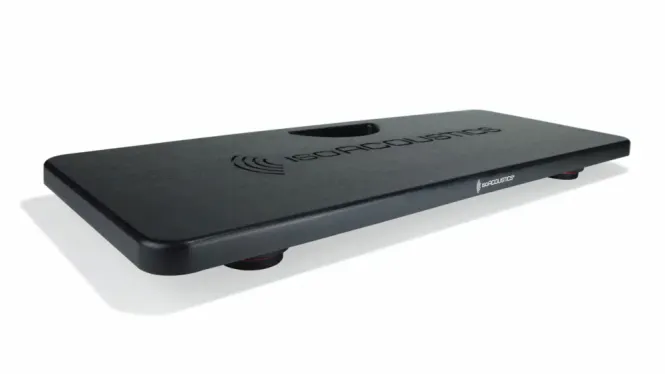
Stage 1 Board Combo Portable isolation platform for Guitar/Bass Combo Amps, Stage Monitors & Subwoofers Superior isolation, sound clarity and consistency The Stage 1 Board Combo is a portable isolation platform that decouples guitar/bass amps, keyboard amps, stage monitors and subwoofers from the stage while improving the sound clarity and the bass punch in a performance. This portable solution will provide consistency in studio, at home and from one stage to the next. Specifications Dimensions (WxDxH) 25” x 10” x 1.85″ (63.5cm x 25.4cm x 4.7cm) Weight capacity 100lbs (45kg) per board Material Rugged ABS polymer Quantity 1 Board per box Same benefits, increased performance With built-in isolators, the Stage 1 Board Combo is a single unit that offers the same benefits as the previous Stage 1 Board when combined with the isolators (sold separately). The Stage 1 Board Combo includes grip tape which can be used to provide a stronger connection between the amp and the board. The Stage 1 Board Combo can accommodate a speaker up to 100 lbs (45 kg) in weight, giving musician’s consistency in their sound night after night, with added clarity and bass punch in their performance. Enjoy consistent results every time you play.
IsoAcoustics Stage 1 ...

1.566,-

IsoAcoustics Stage 1 isolators 4-pack For Guitar/Bass Combo Amps, Stacked 4-12 Cabinets, Stage Monitors & Subwoofers. Consistent sound from one venue to the next The Stage 1 isolators effectively eliminate the vibrational variables that touring musicians experience while playing onstage in a variety of venues and locations, enabling them to have consistent, clear sound night after night. Enjoy Consistent results with greater sound clarity and focus, every time you play. Awesome Sound. Stage to stage. Studio and home. The isolators are rated for up to 200lbs (90 kg) per set of four and are designed for equipment ranging from small bass combo amps to stacked 4-12 cabinets. Specifications Dimensions (WxH) 3.5” x 1.7” (90mm x 42mm) Weight Capacity 200lbs (91kg) per set of 4 Quantity 4 per box
Kali Audio IN-5 B Aktiv ...

3.690,-

Kali Audio IN-5 Black 3-veis Co-Axial studiomonitor med 5’’ basselement, 4’’ mid og 1’’ Textile Dome-diskant. 160W (80+40+40) Class-D forsterker. Svart finish.  Pris pr stykk. Project Independence Kali’s IN-5 is one of the most innovative studio monitors ever made. Combining the natural advantages of a 3-way design with hyper-realistic imaging of a co-axial mid-range and tweeter, it offers more transparency, lower distortion, and a soundstage that must be heard to be believed.   Performance Power. Detail. Soundstage. The IN-5 Studio Monitor is a speaker like no other. Using the same woofer and tweeter from Kali’s celebrated LP-8, the IN-8 adds a midrange driver that surrounds the tweeter, and acts as its waveguide. In doing so, both the tweeter and the woofer are unburdened; with a smaller workload, they are able to play more clearly and with less distortion. The coaxial nature of the midrange and tweeter make the IN-8 an acoustic point source. Off-axis lobing is thereby eliminated, resulting in a stereo soundstage that presents the listener with a hyper-realistic level of detail. All of this means that the IN-8 is extremely accurate and easy to mix on, and that mixes made on the IN-8 will transfer wonderfully to other systems.   Imaging We know. We keep harping on about the "hyper-realistic" imaging of the IN-5. What does that mean? When you listen to a stereo set of speakers, you’re hearing information about where instruments and players were placed when the material was recorded. Even with purely digital material, producers can manipulate physical locations of elements in the mix, and you will hear these on a stereo recording. Not only does this allow producers to create interesting spatial effects, but it means that you can work faster and with more confidence. An accurate soundstage lets you "see" each element of the mix in front of you, so you can hear exactly what happens when you make changes. 2-way systems with good waveguides, like Kali’s LP-6 and LP-8, do a good job at conveying this spatial information. However, because the tweeter and woofer on those speakers (and most studio monitors!) are separate, this information gets lost in the space immediately above and below the speaker. This means that at the listening position, you’re not hearing the full stereo picture. The IN-5 solves this problem. The tweeter and midrange share an acoustic center, and the woofer is crossed over at 330 Hz, so the distance between the woofer and midrange is well under a quarter wavelength at the crossover point. This means that the IN-5 is acoustically a point source. As such, it has the same excellent directivity that the LP-6 and LP-8 have at their sides in a full 360 degrees around the speaker. You’re hearing all of the spatial information at the listening position, so the soundstage that you hear will have every detail that’s present in the mix.   Clarity The IN-5’s total harmonic distortion is less than 1.4%, which is exceptional. This is the result of unburdening both the woofer and the tweeter, so that both are doing less work. The woofer is crossed over at 280 Hz, a full 2.5 octaves lower than on the LP-8. The tweeter is crossed over at 2800Hz, nearly an octave higher than on the LP-8. Taking up the space in between in the hero of the IN-5 system: the 4-Inch, profile-optimized midrange driver. This driver has a lot of work to do. In addition to reproducing midrange frequencies, it also acts as the waveguide for the tweeter. This means that the shape needed to be precisely engineered to provide an ideal dispersion characteristic for the tweeter. It also means that the midrange needs to stay still. In many other co-axial or concentric systems, high excursion from the larger driver causes intermodulation distortion, and degrades the accuracy of the system. The midrange on the IN-5 is limited to less than 1 millimeter peak excursion, making it acoustically stationary while still providing midrange to keep up with the powerful woofer and tweeter.   Boundary EQ Control A speaker’s given position in a space can drastically change it’s frequency response. A speaker placed against a wall or on a desk will sound very different than a speaker placed on a stand, even in a well-treated space. Hard surfaces like walls, desk tops, and recording consoles can change the low end frequency response of the monitor, and degrade the overall clarity of the sound. Happily, most of the common positions are fairly predictable and easily corrected. Kali’s team did our Boundary EQ tuning at The Village Studios in Los Angeles, and came up with boundary compensation EQ settings to help you get the optimum sound for where you need to put your speakers. Combined with the LF and HF trims, this will ensure that the speakers sound their best no matter what room you’re mixing in, or where the speakers are placed.   Easy Connections The IN-5 feature balanced XLR and TRS inputs, and an unbalanced RCA input. The RCA input can be set to -10 dBu sensitivity when you’re using consumer devices like a laptop or smartphone’s headphone jack.   Specifications - Powered: Yes - Amp Class: D - Power Config: Tri-Amped - LF Power: 80 W - Mid-Range Power: 40 W - HF Power: 40 W - Total Power: 160 W - LF Driver: 5-Inch Poly-Coated Paper - Mid-Range Driver: 4-Inch Optimized Profile Poly-Coated Paper - HF Driver: 1-Inch Textile Dome - Freq. Response (-10 dB): 39 Hz - 25 kHz - Freq. Range (±3 dB): 47 Hz - 21 kHz - LF to Mid-Range Crossover: 280 Hz - Mid-Range to HF Crossover: 2800Hz - Listening Distance: 2.2 Meters - Max SPL: 112 dB
Kali Audio IN-5 W Aktiv ...

3.660,-

Kali Audio IN-5 White 3-veis Co-Axial studiomonitor med 5’’ basselement, 4’’ mid og 1’’ Textile Dome-diskant. 160W (80+40+40) Class-D forsterker. Hvit finish.  Pris pr stykk. Project Independence Kali’s IN-5 is one of the most innovative studio monitors ever made. Combining the natural advantages of a 3-way design with hyper-realistic imaging of a co-axial mid-range and tweeter, it offers more transparency, lower distortion, and a soundstage that must be heard to be believed.   Performance Power. Detail. Soundstage. The IN-5 Studio Monitor is a speaker like no other. Using the same woofer and tweeter from Kali’s celebrated LP-8, the IN-8 adds a midrange driver that surrounds the tweeter, and acts as its waveguide. In doing so, both the tweeter and the woofer are unburdened; with a smaller workload, they are able to play more clearly and with less distortion. The coaxial nature of the midrange and tweeter make the IN-8 an acoustic point source. Off-axis lobing is thereby eliminated, resulting in a stereo soundstage that presents the listener with a hyper-realistic level of detail. All of this means that the IN-8 is extremely accurate and easy to mix on, and that mixes made on the IN-8 will transfer wonderfully to other systems.   Imaging We know. We keep harping on about the "hyper-realistic" imaging of the IN-5. What does that mean? When you listen to a stereo set of speakers, you’re hearing information about where instruments and players were placed when the material was recorded. Even with purely digital material, producers can manipulate physical locations of elements in the mix, and you will hear these on a stereo recording. Not only does this allow producers to create interesting spatial effects, but it means that you can work faster and with more confidence. An accurate soundstage lets you "see" each element of the mix in front of you, so you can hear exactly what happens when you make changes. 2-way systems with good waveguides, like Kali’s LP-6 and LP-8, do a good job at conveying this spatial information. However, because the tweeter and woofer on those speakers (and most studio monitors!) are separate, this information gets lost in the space immediately above and below the speaker. This means that at the listening position, you’re not hearing the full stereo picture. The IN-5 solves this problem. The tweeter and midrange share an acoustic center, and the woofer is crossed over at 330 Hz, so the distance between the woofer and midrange is well under a quarter wavelength at the crossover point. This means that the IN-5 is acoustically a point source. As such, it has the same excellent directivity that the LP-6 and LP-8 have at their sides in a full 360 degrees around the speaker. You’re hearing all of the spatial information at the listening position, so the soundstage that you hear will have every detail that’s present in the mix.   Clarity The IN-5’s total harmonic distortion is less than 1.4%, which is exceptional. This is the result of unburdening both the woofer and the tweeter, so that both are doing less work. The woofer is crossed over at 280 Hz, a full 2.5 octaves lower than on the LP-8. The tweeter is crossed over at 2800Hz, nearly an octave higher than on the LP-8. Taking up the space in between in the hero of the IN-5 system: the 4-Inch, profile-optimized midrange driver. This driver has a lot of work to do. In addition to reproducing midrange frequencies, it also acts as the waveguide for the tweeter. This means that the shape needed to be precisely engineered to provide an ideal dispersion characteristic for the tweeter. It also means that the midrange needs to stay still. In many other co-axial or concentric systems, high excursion from the larger driver causes intermodulation distortion, and degrades the accuracy of the system. The midrange on the IN-5 is limited to less than 1 millimeter peak excursion, making it acoustically stationary while still providing midrange to keep up with the powerful woofer and tweeter.   Boundary EQ Control A speaker’s given position in a space can drastically change it’s frequency response. A speaker placed against a wall or on a desk will sound very different than a speaker placed on a stand, even in a well-treated space. Hard surfaces like walls, desk tops, and recording consoles can change the low end frequency response of the monitor, and degrade the overall clarity of the sound. Happily, most of the common positions are fairly predictable and easily corrected. Kali’s team did our Boundary EQ tuning at The Village Studios in Los Angeles, and came up with boundary compensation EQ settings to help you get the optimum sound for where you need to put your speakers. Combined with the LF and HF trims, this will ensure that the speakers sound their best no matter what room you’re mixing in, or where the speakers are placed.   Easy Connections The IN-5 feature balanced XLR and TRS inputs, and an unbalanced RCA input. The RCA input can be set to -10 dBu sensitivity when you’re using consumer devices like a laptop or smartphone’s headphone jack.   Specifications - Powered: Yes - Amp Class: D - Power Config: Tri-Amped - LF Power: 80 W - Mid-Range Power: 40 W - HF Power: 40 W - Total Power: 160 W - LF Driver: 5-Inch Poly-Coated Paper - Mid-Range Driver: 4-Inch Optimized Profile Poly-Coated Paper - HF Driver: 1-Inch Textile Dome - Freq. Response (-10 dB): 39 Hz - 25 kHz - Freq. Range (±3 dB): 47 Hz - 21 kHz - LF to Mid-Range Crossover: 280 Hz - Mid-Range to HF Crossover: 2800Hz - Listening Distance: 2.2 Meters - Max SPL: 112 dB
Kali Audio IN-8 V2 B Aktiv ...

4.190,-

IN-8 V2 Black 3-veis Co-Axial studiomonitor med 8’’ basselement, 4’’ mid og 1’’ Soft Dome-diskant. 140W (60+40+40) Class-D forsterker. Versjon 2. Svart finish. Project Independence Kali’s IN-8 V2 is one of the most innovative studio monitors ever made. Combining the natural advantages of a 3-way design with hyper-realistic imaging of a co-axial mid-range and tweeter, it offers more transparency, lower distortion, and a soundstage that must be heard to be believed.   Performance Power. Detail. Soundstage. The IN-8 V2 Studio Monitor is a speaker like no other. Using the same woofer and tweeter from Kali’s celebrated LP-8 V2, the IN-8 V2 adds a midrange driver that surrounds the tweeter, and acts as its waveguide. In doing so, both the tweeter and the woofer are unburdened; with a smaller workload, they are able to play more clearly and with less distortion. The coaxial nature of the midrange and tweeter make the IN-8 V2 an acoustic point source. Off-axis lobing is thereby eliminated, resulting in a stereo soundstage that presents the listener with a hyper-realistic level of detail. All of this means that the IN-8 V2 is extremely accurate and easy to mix on, and that mixes made on the IN-8 V2 will transfer wonderfully to other systems.   Imaging We know. We keep harping on about the "hyper-realistic" imaging of the IN-8 V2. What does that mean? When you listen to a stereo set of speakers, you’re hearing information about where instruments and players were placed when the material was recorded. Even with purely digital material, producers can manipulate physical locations of elements in the mix, and you will hear these on a stereo recording. Not only does this allow producers to create interesting spatial effects, but it means that you can work faster and with more confidence. An accurate soundstage lets you "see" each element of the mix in front of you, so you can hear exactly what happens when you make changes. 2-way systems with good waveguides, like Kali’s LP-6 V2 and LP-8 V2, do a good job at conveying this spatial information. However, because the tweeter and woofer on those speakers (and most studio monitors!) are separate, this information gets lost in the space immediately above and below the speaker. This means that at the listening position, you’re not hearing the full stereo picture. The IN-8 solves this problem. The tweeter and midrange share an acoustic center, and the woofer is crossed over at 330 Hz, so the distance between the woofer and midrange is well under a quarter wavelength at the crossover point. This means that the IN-8 is acoustically a point source. As such, it has the same excellent directivity that the LP-6 and LP-8 have at their sides in a full 360 degrees around the speaker. You’re hearing all of the spatial information at the listening position, so the soundstage that you hear will have every detail that’s present in the mix.   Clarity The IN-8 V2’s total harmonic distortion is less than 1.4%, which is exceptional. This is the result of unburdening both the woofer and the tweeter, so that both are doing less work. The woofer is crossed over at 330 Hz, a full 2.5 octaves lower than on the LP-8. The tweeter is crossed over at 3000 Hz, nearly an octave higher than on the LP-8. Taking up the space in between in the hero of the IN-8 system: the 4-Inch, profile-optimized midrange driver. This driver has a lot of work to do. In addition to reproducing midrange frequencies, it also acts as the waveguide for the tweeter. This means that the shape needed to be precisely engineered to provide an ideal dispersion characteristic for the tweeter. It also means that the midrange needs to stay still. In many other co-axial or concentric systems, high excursion from the larger driver causes intermodulation distortion, and degrades the accuracy of the system. The midrange on the IN-8 is limited to less than 1 millimeter peak excursion, making it acoustically stationary while still providing midrange to keep up with the powerful woofer and tweeter.   Boundary EQ Control A speaker’s given position in a space can drastically change it’s frequency response. A speaker placed against a wall or on a desk will sound very different than a speaker placed on a stand, even in a well-treated space. Hard surfaces like walls, desk tops, and recording consoles can change the low end frequency response of the monitor, and degrade the overall clarity of the sound. Happily, most of the common positions are fairly predictable and easily corrected. Kali’s team did our Boundary EQ tuning at The Village Studios in Los Angeles, and came up with boundary compensation EQ settings to help you get the optimum sound for where you need to put your speakers. Combined with the LF and HF trims, this will ensure that the speakers sound their best no matter what room you’re mixing in, or where the speakers are placed. Easy Connections The LP-6 V2 and LP-8 V2 both feature balanced XLR and TRS inputs, and an unbalanced RCA input. The RCA input can be set to -10 dBu sensitivity when you’re using consumer devices like a laptop or smartphone’s headphone jack.   Specifications - Powered: Yes - Amp Class: D - Power Config: Tri-Amped - LF Power: 60 W - Mid-Range Power: 40 W - HF Power: 40 W - Total Power: 140 W - LF Driver: 8-Inch Poly-Coated Paper - Mid-Range Driver: 4-Inch Optimized Profile Poly-Coated Paper - HF Driver: 1-Inch Textile Dome - Freq. Response (-10 dB): 37 Hz - 25 kHz - Freq. Range (±3 dB): 45 Hz - 21 kHz - LF to Mid-Range Crossover: 330 Hz - Mid-Range to HF Crossover: 3000 Hz - Listening Distance: 2.8 Meters - Max SPL: 114 dB
Kali Audio IN-8 V2 W Aktiv ...

4.290,-

Kali Audio IN-8 V2 White 3-veis Co-Axial studiomonitor med 8’’ basselement, 4’’ mellomtone og 1’’ Soft Dome-diskant. 140W (60+40+40) Class-D forsterker. Versjon 2. Hvit. _____ Project Independence Kali’s IN-8 V2 is one of the most innovative studio monitors ever made. Combining the natural advantages of a 3-way design with hyper-realistic imaging of a co-axial mid-range and tweeter, it offers more transparency, lower distortion, and a soundstage that must be heard to be believed. Performance Power. Detail. Soundstage. The IN-8 V2 Studio Monitor is a speaker like no other. Using the same woofer and tweeter from Kali’s celebrated LP-8, the IN-8 V2 adds a midrange driver that surrounds the tweeter, and acts as its waveguide.   In doing so, both the tweeter and the woofer are unburdened; with a smaller workload, they are able to play more clearly and with less distortion. The coaxial nature of the midrange and tweeter make the IN-8 an acoustic point source. Off-axis lobing is thereby eliminated, resulting in a stereo soundstage that presents the listener with a hyper-realistic level of detail. All of this means that the IN-8 is extremely accurate and easy to mix on, and that mixes made on the IN-8 will transfer wonderfully to other systems. Imaging We know. We keep harping on about the “hyper-realistic” imaging of the IN-8 V2. What does that mean? When you listen to a stereo set of speakers, you’re hearing information about where instruments and players were placed when the material was recorded. Even with purely digital material, producers can manipulate physical locations of elements in the mix, and you will hear these on a stereo recording. Not only does this allow producers to create interesting spatial effects, but it means that you can work faster and with more confidence. An accurate soundstage lets you “see” each element of the mix in front of you, so you can hear exactly what happens when you make changes. 2-way systems with good waveguides, like Kali’s LP-6 and LP-8, do a good job at conveying this spatial information. However, because the tweeter and woofer on those speakers (and most studio monitors!) are separate, this information gets lost in the space immediately above and below the speaker. This means that at the listening position, you’re not hearing the full stereo picture. The IN-8 solves this problem. The tweeter and midrange share an acoustic center, and the woofer is crossed over at 330 Hz, so the distance between the woofer and midrange is well under a quarter wavelength at the crossover point. This means that the IN-8 is acoustically a point source. As such, it has the same excellent directivity that the LP-6 and LP-8 have at their sides in a full 360 degrees around the speaker. You’re hearing all of the spatial information at the listening position, so the soundstage that you hear will have every detail that’s present in the mix. Clarity The IN-8 V2’s total harmonic distortion is less than 1.4%, which is exceptional. This is the result of unburdening both the woofer and the tweeter, so that both are doing less work. The woofer is crossed over at 330 Hz, a full 2.5 octaves lower than on the LP-8. The tweeter is crossed over at 3000 Hz, nearly an octave higher than on the LP-8. Taking up the space in between in the hero of the IN-8 system: the 4-Inch, profile-optimized midrange driver. This driver has a lot of work to do. In addition to reproducing midrange frequencies, it also acts as the waveguide for the tweeter. This means that the shape needed to be precisely engineered to provide an ideal dispersion characteristic for the tweeter. It also means that the midrange needs to stay still. In many other co-axial or concentric systems, high excursion from the larger driver causes intermodulation distortion, and degrades the accuracy of the system. The midrange on the IN-8 is limited to less than 1 millimeter peak excursion, making it acoustically stationary while still providing midrange to keep up with the powerful woofer and tweeter. Boundary EQ Control A speaker’s given position in a space can drastically change it’s frequency response. A speaker placed against a wall or on a desk will sound very different than a speaker placed on a stand, even in a well-treated space. Hard surfaces like walls, desk tops, and recording consoles can change the low end frequency response of the monitor, and degrade the overall clarity of the sound. Happily, most of the common positions are fairly predictable and easily corrected. Kali’s team did our Boundary EQ tuning at The Village Studios in Los Angeles, and came up with boundary compensation EQ settings to help you get the optimum sound for where you need to put your speakers. Combined with the LF and HF trims, this will ensure that the speakers sound their best no matter what room you’re mixing in, or where the speakers are placed. Easy Connections The LP-6 and LP-8 both feature balanced XLR and TRS inputs, and an unbalanced RCA input. The RCA input can be set to -10 dBu sensitivity when you’re using consumer devices like a laptop or smartphone’s headphone jack. Specifications - Powered: Yes - Amp Class: D - Power Config: Tri-Amped - LF Power: 60 W - Mid-Range Power: 40 W - HF Power: 40 W - Total Power: 140 W - LF Driver: 8-Inch Poly-Coated Paper - Mid-Range Driver: 4-Inch Optimized Profile Poly-Coated Paper - HF Driver: 1-Inch Textile Dome - Freq. Response (-10 dB): 37 Hz - 25 kHz - Freq. Range (±3 dB): 45 Hz - 21 kHz - LF to Mid-Range Crossover: 330 Hz - Mid-Range to HF Crossover: 3000 Hz - Listening Distance: 2.8 Meters - Max SPL: 114 dB
Kali Audio IN-UNF 3-veis ...

6.990,-

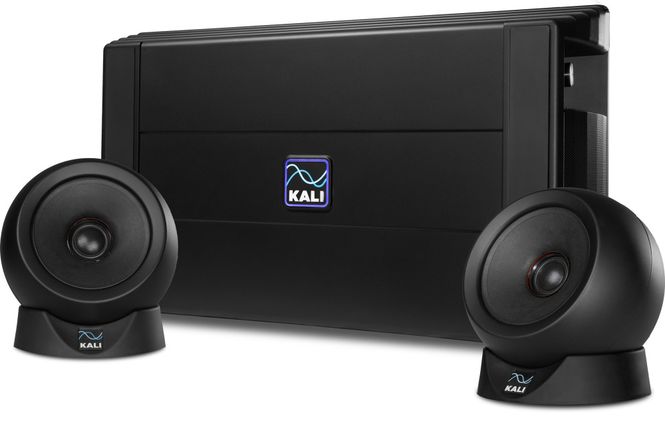
Kali Audio IN-UNF 3-veis studio monitor system. To satelitter og subwoofer. IN-UNF er eit 3-vegs, ”full-range”, studiohøyttalersystem som er designet for små rom der man enten på grunn av romakustikk eller naboers toleranse må holde volumet nede. IN-UNF gir deg referenselyd av høgste kvalitet og godt med ”headroom” på en armlengdes avstand. Systemet består av en bassenhet og to satelitter. Bassenheten anvender to stk. 4,5-tommer element, og satelittene anvender samme mellomregister/tweeter-enhet som finnes i Kalis hyllede IN-5 og IN-8 studiomonitorer. USB, optisk, 3,5 mm og balanserte Jack innganger. Hele systemet får plass på skrivbordet og gir samme full-range, uforvrengt lytteopplevelse omtrent som et par IN-8 på standard lytteavstand. Fleksibelt og enkelt. Bassenheten kan plaseres vertikalt f.eks bak en laptop eller skjerm, eller horisontalt f.eks som monitorbase for en skjerm. Kali Audio’s IN-UNF  is an ultra-nearfield desktop studio monitor system. It’s designed to be used in small spaces where the ability to get loud is limited, either by room acoustics or the tolerance of neighbors. The IN-UNF presents full-range audio at reference levels at .8 meters, or about arm’s length. The entire system sits on your desk, and provides the same full-range, low distortion listening experience as a pair of IN-8s at standard listening distance. Flexible setup options allow users to easily integrate the IN-UNF in their existing deskscape; the bass unit can be placed vertically to sit behind a laptop or display, or horizontally to be used as a monitor riser for a display. The IN-UNF consists of three main pieces: a bass unit and two satellites. The bass unit houses two high-excursion 4.5-Inch woofers as well as the amplifier and other electronics for the system. The two woofers are horizontally opposed, so no net vibration is transferred to the desk or to anything sitting on the bass unit. The two satellites use the same coaxial midrange and tweeter as Kali’s acclaimed IN-5 and IN-8 studio monitors. The architecture of this element has been praised for its excellent stereo imaging capabilities. At the close range of the IN-UNF, the intimacy and detail of the stereo image is unrivaled. You’ll hear a more engrossing, lifelike picture of your mix than you’ve ever heard before. The bass unit also features a variety of inputs to meet all your audio needs. Via the USB-C connector, which supports 24-bit resolution and 48k sample rate, you can connect computers, phones, and tablets without the need for an outboard interface or DAC. Optical and 3.5mm inputs provide support for both digital and analog connection to consumer devices like game consoles and receivers. For connection to standard pro audio devices, stereo TRS inputs are provided. The IN-UNF is uniquely tuned for its role as a desktop speaker. The desk is accounted for as an acoustic element of the system, solving some of the problems that are typically presented with putting speakers on a desk. DIP switches are provided to account for the position of the system in a room, and for you to dial in bass, mids, and treble to your preferences. The IN-UNF is part of Kali’s 2nd Wave product family, utilizing low noise-floor technology, upgraded drivers, and an advanced limiter circuit to maximize output and fidelity while keeping noise to a minimum. Specs: - Powered:Yes - Amplifier Class: D - Power Configuration: 2-Channel, Each Channel Bi-amped - HF/Midrange Power Per Channel 60 W - LF Power Per Channel 100 W - LF Driver: 4.5-Inch Long-Excursion Woofer - Mid-Range Driver: 4-Inch Optimized Profile Paper - HF Driver:  1-Inch Textile Dome - Frequency Response: (-10 dB) 39 Hz - 25 kHz - LF to Mid-Range Crossover:  280 Hz - Mid-Range to HF Crossover: 2800 Hz - SPL: 85 dB Continuous at .8 Meters with 20 dB Headroom - Max SPL: 103 dB Stereo Inputs - USB-C (Digital) - Optical (Digital) - 3.5mm (Unbalanced, -10 dBV) - TRS (Balanced, +4 dBU) In the box: - IN-UNF Bass/Input Unit - 2 x Midrange/HF Satellites - 2 x Satellite Stands - Power Cable - USB-A to USB-C Cable - Quickstart/Setup Guide
Kali Audio LP-6 V2 Aktiv ...

2.340,-

LP-6 V2 Black Studiomonitor 6". Svart Versjon 2 av suksessmonitoren Kali LP6. Studiomonitor med 6,5’’ basselement og 1’’ Soft Dome-diskant. 80W (40+40) Klasse-D forsterker. LP6 V2 er og forbedret med 12db lavere egenstøy (self noice) og input er øket med 3db. EQ'en i nye LP6 V2 er og forbedret. Svart finish. Project Lone Pine Studio Monitors Version 2 The new LP-6 V2 is part of Kali’s 2nd Wave of loudspeakers. 2nd Wave products draw on 3 years of R&D for across-the-board improvements. A new amplifier platform allows for 12 dB less self noise, while input sensitivity has been increased by 3 dB. The tuning has been refined for smoother HF response, and the boundary EQs have been updated to reflect common real-world use cases. Physical improvements include lighter transducer cones for better transient response and upgraded cabinet construction for greater reliability.   Transparent Sound The Lone Pine Series is designed to allow you to hear every detail that's happening in your mix. This starts with an exceptionally accurate frequency response. Whatever is present on your mix is what you'll hear in these monitors. Nothing is boosted or suppressed to cover flaws or try to sound more pleasing. With the LP-6 and LP-8, you can mix with more confidence, and you can also be assured that your mix will translate as best as possible to whatever systems your audience is using. 3-D Imaging Waveguide The waveguide on Project Lone Pine monitors allows you to hear spatial details and a soundstage that is wider, taller, and deeper than the space between the speakers themselves. High dynamic range, low distortion The dual layer, large diameter voice coil on the LP-Series helps keep the sound clear and free of distortion. Low noise port tube The LP-6 and LP-8 both have the clean, punchy bass of a front-ported speaker with very low noise from the port tube. High Output At continuous reference-level output, the LP-Series monitors have at least 20 dB headroom at the listening position. The LP-6 has enough output for most 1-2 person setups, and LP-8 can handle larger setups easily. Ample headroom ensures that even loud mixes with high dynamic range will come through clearly.   Bass Power  Bass on the LP-Series monitors is delivered by larger magnets and larger voice coils than any comparable speakers on the market. This gives you more accurate bass response that extends lower, so you can dial in exactly the low end sound you need.  Boundary EQ Control A speaker's given position in a space can drastically change it's frequency response. A speaker placed against a wall or on a desk will sound very different than a speaker placed on a stand, even in a well-treated space. Hard surfaces like walls, desk tops, and recording consoles can change the low end frequency response of the monitor, and degrade the overall clarity of the sound. Happily, most of the common positions are fairly predictable and easily corrected.  Kali's team did our Boundary EQ tuning at The Village Studios in Los Angeles, and came up with boundary compensation EQ settings to help you get the optimum sound for where you need to put your speakers. Combined with the LF and HF trims, this will ensure that the speakers sound their best no matter what room you're mixing in, or where the speakers are placed. Easy Connections The LP-6 and LP-8 both feature balanced XLR and TRS inputs, and an unbalanced RCA input. The RCA input can be set to -10 dBu sensitivity when you're using consumer devices like a laptop or smartphone's headphone jack.  Class D Power The integrated Class D Power amp delivers clean, reliable power that's optimized to this speaker. Both models use 40W for the 1" soft dome tweeter. The LP-6 uses 40W for the 6.5-Inch woofer, and the LP-8 uses 60W for the 8-Inch woofer. - Aktiv 2-väg - 80W (40+40) Class-D förstärkare - 6,5" baselement - 1" Soft Dome-diskant - Frekvensåtergivning (-10 dB): 39 Hz - 25 kHz - Frekvensomfång (± 3 dB): 47 Hz - 21 kHz - Delningsfrekvens: 1,5 kHz - Max SPL: 112 dB - Obalanserad ingångar: 1x RCA - Balanserade ingångar: 1x TRS och 1x XLR - TRS/XLR ingångskänslighet: +4 dB - RCA ingångskänslighet: -10 dB - HF Trim: -2 dB, ±0 dB, +2 dB - LF Trim: -2 dB, ±0 dB, +2 dB
Kali Audio LP-6 V2 W Aktiv ...

2.340,-

LP-6 V2 White Studiomonitor 6". Hvit Versjon 2 av suksessmonitoren Kali LP6. Studiomonitor med 6,5’’ basselement og 1’’ Soft Dome-diskant. 80W (40+40) Klasse-D forsterker. LP6 V2 er og forbedret med 12db lavere egenstøy (self noice) og input er øket med 3db. EQ'en i nye LP6 V2 er og forbedret. Hvit finish. Project Lone Pine Studio Monitors Version 2 The new LP-6 V2 is part of Kali’s 2nd Wave of loudspeakers. 2nd Wave products draw on 3 years of R&D for across-the-board improvements. A new amplifier platform allows for 12 dB less self noise, while input sensitivity has been increased by 3 dB. The tuning has been refined for smoother HF response, and the boundary EQs have been updated to reflect common real-world use cases. Physical improvements include lighter transducer cones for better transient response and upgraded cabinet construction for greater reliability.   Transparent Sound The Lone Pine Series is designed to allow you to hear every detail that's happening in your mix. This starts with an exceptionally accurate frequency response. Whatever is present on your mix is what you'll hear in these monitors. Nothing is boosted or suppressed to cover flaws or try to sound more pleasing. With the LP-6 and LP-8, you can mix with more confidence, and you can also be assured that your mix will translate as best as possible to whatever systems your audience is using. 3-D Imaging Waveguide The waveguide on Project Lone Pine monitors allows you to hear spatial details and a soundstage that is wider, taller, and deeper than the space between the speakers themselves. High dynamic range, low distortion The dual layer, large diameter voice coil on the LP-Series helps keep the sound clear and free of distortion. Low noise port tube The LP-6 and LP-8 both have the clean, punchy bass of a front-ported speaker with very low noise from the port tube. High Output At continuous reference-level output, the LP-Series monitors have at least 20 dB headroom at the listening position. The LP-6 has enough output for most 1-2 person setups, and LP-8 can handle larger setups easily. Ample headroom ensures that even loud mixes with high dynamic range will come through clearly.   Bass Power  Bass on the LP-Series monitors is delivered by larger magnets and larger voice coils than any comparable speakers on the market. This gives you more accurate bass response that extends lower, so you can dial in exactly the low end sound you need.  Boundary EQ Control A speaker's given position in a space can drastically change it's frequency response. A speaker placed against a wall or on a desk will sound very different than a speaker placed on a stand, even in a well-treated space. Hard surfaces like walls, desk tops, and recording consoles can change the low end frequency response of the monitor, and degrade the overall clarity of the sound. Happily, most of the common positions are fairly predictable and easily corrected.  Kali's team did our Boundary EQ tuning at The Village Studios in Los Angeles, and came up with boundary compensation EQ settings to help you get the optimum sound for where you need to put your speakers. Combined with the LF and HF trims, this will ensure that the speakers sound their best no matter what room you're mixing in, or where the speakers are placed. Easy Connections The LP-6 and LP-8 both feature balanced XLR and TRS inputs, and an unbalanced RCA input. The RCA input can be set to -10 dBu sensitivity when you're using consumer devices like a laptop or smartphone's headphone jack.  Class D Power The integrated Class D Power amp delivers clean, reliable power that's optimized to this speaker. Both models use 40W for the 1" soft dome tweeter. The LP-6 uses 40W for the 6.5-Inch woofer, and the LP-8 uses 60W for the 8-Inch woofer. - Aktiv 2-väg - 80W (40+40) Class-D förstärkare - 6,5" baselement - 1" Soft Dome-diskant - Frekvensåtergivning (-10 dB): 39 Hz - 25 kHz - Frekvensomfång (± 3 dB): 47 Hz - 21 kHz - Delningsfrekvens: 1,5 kHz - Max SPL: 112 dB - Obalanserad ingångar: 1x RCA - Balanserade ingångar: 1x TRS och 1x XLR - TRS/XLR ingångskänslighet: +4 dB - RCA ingångskänslighet: -10 dB - HF Trim: -2 dB, ±0 dB, +2 dB - LF Trim: -2 dB, ±0 dB, +2 dB
Kali Audio LP-8 V2 Aktiv ...

2.910,-

LP-8 V2 Black Versjon 2 av suksessmonitoren Kali LP8. Studiomonitor med 8’’ basselement og 1’’ Soft Dome-diskant. 80W (40+40) Klasse-D forsterker. LP6 V2 er og forbedret med 12db lavere egenstøy (self noice) og input er øket med 3db. EQ'en i nye LP6 V2 er og forbedret. Svart finish. Project Lone Pine Studio Monitors Version 2   The new LP-8 V2 is part of Kali’s 2nd Wave of loudspeakers. 2nd Wave products draw on 3 years of R&D for across-the-board improvements. A new amplifier platform allows for 12 dB less self noise, while input sensitivity has been increased by 3 dB. The tuning has been refined for smoother HF response, and the boundary EQs have been updated to reflect common real-world use cases. Physical improvements include lighter transducer cones for better transient response and upgraded cabinet construction for greater reliability.   Transparent Sound The Lone Pine Series is designed to allow you to hear every detail that's happening in your mix. This starts with an exceptionally accurate frequency response. Whatever is present on your mix is what you'll hear in these monitors. Nothing is boosted or suppressed to cover flaws or try to sound more pleasing. With the LP-6 V2 and LP-8 V2, you can mix with more confidence, and you can also be assured that your mix will translate as best as possible to whatever systems your audience is using.   3-D Imaging Waveguide The waveguide on Project Lone Pine monitors allows you to hear spatial details and a soundstage that is wider, taller, and deeper than the space between the speakers themselves.   High dynamic range, low distortion The dual layer, large diameter voice coil on the LP-Series helps keep the sound clear and free of distortion.   Low noise port tube The LP-6 V2 and LP-8 V2 both have the clean, punchy bass of a front-ported speaker with very low noise from the port tube.   High Output At continuous reference-level output, the LP-Series monitors have at least 20 dB headroom at the listening position. The LP-6 has enough output for most 1-2 person setups, and LP-8 can handle larger setups easily. Ample headroom ensures that even loud mixes with high dynamic range will come through clearly.   Bass Power  Bass on the LP-Series monitors is delivered by larger magnets and larger voice coils than any comparable speakers on the market. This gives you more accurate bass response that extends lower, so you can dial in exactly the low end sound you need.    Boundary EQ Control A speaker's given position in a space can drastically change it's frequency response. A speaker placed against a wall or on a desk will sound very different than a speaker placed on a stand, even in a well-treated space. Hard surfaces like walls, desk tops, and recording consoles can change the low end frequency response of the monitor, and degrade the overall clarity of the sound. Happily, most of the common positions are fairly predictable and easily corrected.  Kali's team did our Boundary EQ tuning at The Village Studios in Los Angeles, and came up with boundary compensation EQ settings to help you get the optimum sound for where you need to put your speakers. Combined with the LF and HF trims, this will ensure that the speakers sound their best no matter what room you're mixing in, or where the speakers are placed.   Easy Connections The LP-6 V2 and LP-8 V2 both feature balanced XLR and TRS inputs, and an unbalanced RCA input. The RCA input can be set to -10 dBu sensitivity when you're using consumer devices like a laptop or smartphone's headphone jack.    Class D Power The integrated Class D Power amp delivers clean, reliable power that's optimized to this speaker. Both models use 40W for the 1" soft dome tweeter. The LP-6 uses 40W for the 6.5-Inch woofer, and the LP-8 V2 uses 60W for the 8-Inch woofer.   - Aktiv 2-väg - 100W (60+40) Class-D förstärkare - 8" baselement - 1" Soft Dome-diskant - Frekvensåtergivning (-10 dB): 37 Hz - 25 kHz - Frekvensomfång (± 3 dB): 45 Hz - 21 kHz - Delningsfrekvens: 1,8 kHz - Max SPL: 114 dB - Obalanserad ingångar: 1x RCA - Balanserade ingångar: 1x TRS och 1x XLR - TRS/XLR ingångskänslighet: +4 dB - RCA ingångskänslighet: -10 dB - HF Trim: -2 dB, ±0 dB, +2 dB - LF Trim: -2 dB, ±0 dB, +2 dB
Kali Audio WS-12 V2 Aktiv Sub ...

9.990,-

Kali Audio WS-12 V2 Kali Audio's WS-12 V2 is a 1000 W, 12-inch subwoofer for studio and live use. With a frequency response down to 23 Hz, it is an authoritative studio subwoofer. The 1000 W power amp allows the WS-12 to be used for bass management in 5.1 systems, and one WS-12 will be sufficient when using up to 5 of Kali’s IN-8s. An 18mm wooden enclosure means that the WS-12 is rugged and portable, making it a perfect solution for use in small PA systems. _____ WS-12 V2 är Kali Audios nya 12-tums subwoofer för studio- och livebruk. Med ett utökat frekvensomfång från 23 Hz -200 Hz och slutsteg på 1000 W är WS-12 är perfekt för Bas Management i Dolby Atmos eller 5.1-system, och en WS-12 räcker när man använder upp till 5 av Kalis IN-8. WS-12 V2 är redo för liveanvändning. Med ett 18 mm plywoodhölje, ett stålgaller och en robust, strukturerad beläggning, kan den stå emot stlitage från scenarbete och transport med mera. _____ 2nd Wave Kali Audio's WS-12 V2 is a 1000 W, 12-inch subwoofer for studio and live use. With a frequency response down to 23 Hz, it is an authoritative studio subwoofer. The 1000 W power amp allows the WS-12 to be used for bass management in 5.1 systems, and one WS-12 will be sufficient when using up to 5 of Kali’s IN-8s. The WS-12 is the only subwoofer that can pull double duty as a studio and live subwoofer. An 18mm wooden enclosure means that the WS-12 V2is rugged and portable, making it a perfect solution for use in small PA systems. The WS-12 V2 is specifically designed to fit into small passenger cars, making it easy to carry to and from gigs. V2 features several improvements over the original version. Signal-to-noise on the crossover is improved by more than 6 dB. The V2 also features an M10 pole cup, allowing users to attach a pole for mounting full-range PA speakers. Unlimited Power The WS-12 V2 uses a Class D power amp capable of 1000 W peak power and 500 W continuous power. This allows the WS-12 V2 to play up to 123 dB Max SPL; enough SPL to provide LFE for at least a 5.1 system of IN-8s. In many listening environments, 1-2 WS-12s can easily handle both LFE and bass management for a full Atmos system. Dolby Compliant The WS-12 is fully compliant with Dolby’s specifications for subwoofers to be used for Atmos monitoring for both music and picture. Low Noise Port Tube On most port tubes, air leaves at different speeds from different points of the opening, creating noisy turbulence. This turbulence can be heard as "chuffing," or an audible air sound coming from the monitor. This sound will add to the noise floor and obscure the details of the low end. The port tube on the WS-12 V2 was designed to ensure that all of the air leaves the port tube at the same velocity. This helps add to the low end response of the speaker, while keeping the bass clean, tight, and devoid of extra noise. Selectable crossover The WS-12 V2 has a user-selectable crossover with 5 Hz steps from 50 to 110 Hz. This allows users to integrate the WS-12 with any pair of stereo speakers, including studio monitors, hifi speakers, and PA speakers. Most studio monitors, including all models offered by Kali Audio, will work best with the 80 Hz setting. Polarity Inversion. The polarity reverse function on the WS-12 allows you to flip polarity by 180 degrees to better integrate with the full range speakers and the room. Road-Ready The WS-12 V2 is ready for live use. With an 18-mm plywood enclosure, a steel grille, and a rugged, textured coating, it can stand up to stage duty and the abuses of being transported night in and night out. Steel handles make the WS-12 easy to carry, and its dimensions are specifically tailored to fit into the trunk of a Toyota Corolla, meaning that it can be easily transported in most passenger cars.
Kali Audio WS-6.2 Aktiv Sub ...

6.590,-

WS-6.2 The WS-6.2 is a studio subwoofer with 2 x 6.5-Inch horizontally opposed woofers. Taking up less than half the space of comparably performing subwoofers, it is ideal for stereo mix setups where space is at a premium. It is capable of 120 dB max SPL and 27 Hz lower frequency response. WS-6.2 er en liten smidig 1000 watt studiosubwoofer med 2 x 6,5-tommers basshøyttalere som passar perfekt til Kali Audios LP- og IN-serie. WS-6.2 har ett 80 Hz crossover-filter, LFE-mode eller kan anvendes med ett eksternt delefilter. Polariteten kan også snues om det behøves. Med Kali Audios WS-6.2 får du en klar, tydelig og kraftfull bass med minimal forvrenging. WS-6.2 kommer med stereo RCA, XLR/TRS innganger og stereo XLR ut. Mulighet for bypass av sub med footswitch finnes også. The WS-6.2 is a studio subwoofer with 2 x 6.5-Inch high excursion woofers. Designed to be both powerful and small, the WS-6.2 takes up less than half as much space as comparably performing subwoofers. Despite its diminutive form factor, it is capable of 120 dB max SPL and 27 Hz lower frequency response. The woofers are horizontally opposed, meaning that there is no net vibration from the subwoofer. A built-in 80 Hz high-passed output makes it ideal for pairing with most popular studio monitors, including Kali’s LP- and IN-Series monitors. A footswitch jack allows users to bypass both the sub and the crossover so they can hear their mix on their full range speakers. Footswitches are sold separately, but a number of inexpensive options are available at every music retailer. In addition to the 80 Hz crossover, the subwoofer can be set for LFE mode or be used with an external crossover. Polarity may also be reversed if necessary. Like all of Kali’s speakers, the WS-6.2 uses a unique port tube that virtually eliminates chuffing and port compression, allowing for clear, powerful bass with minimal distortion.
Viser 61 til 75 (av 133 produkter)
  • vipps-orange.png
  • klarna-light.png
  • mastercard-full.png
  • visa.png