Hopp til innhold

Norsk nettbutikk | Rask levering | Frakt i hele Norge

Aktive

 
Genelec 8030CPM Aktiv Monitor ...

8.295,-

Genelec 8030 5" kompakt monitor med x2 50W amp i solid mørk grå alu utførelse. Maks SPL på 104dB. When your project requires a powerful performance with no sacrifice in quality, the Genelec 8030C active studio monitor is designed to exceed your expectations. The 8030C, introduced in 2017, even delivers 4 dB higher SPL and has a lower energy consumption than earlier models of 8030. As strikingly stylish as it is sonically impressive, the 8030C features the rounded edges and colour-free, accurate reproduction of the rigid all-aluminium Minimum Diffraction Enclosure (MDE™). Every element of the design is crafted to perfect your listening experience. Precise on- and off-axis frequency reproduction is courtesy of the Directivity Control Waveguide (DCW™). Broad low-frequencies and high SPLs are delivered with a flow-optimised internal curved reflex tube and a maximised internal volume. And when you’re finished, Genelec Intelligent Signal Sensing (ISS™) circuitry detects when your system is no longer in use, placing it into an environmentally friendly, power-saving standby mode. From professional studios to outside broadcast vehicles, the 8030C has been crafted to combine extraordinary power with absolute precision. Technical specifications    104 dB      47 Hz – 25 kHz (-6 dB)      ± 2.0 dB (54 Hz - 20 kHz)      Woofer 5 in + Tweeter 3/4 in metal dome + DCW™      Woofer 50 W + Tweeter 50 W (both Class D)      H 299 x W 189 x D 178 mm, with Iso-Pod™      5.0 kg      1 x XLR analog input
Kali Audio IN-5 B Aktiv ...

3.690,-

Kali Audio IN-5 Black 3-veis Co-Axial studiomonitor med 5’’ basselement, 4’’ mid og 1’’ Textile Dome-diskant. 160W (80+40+40) Class-D forsterker. Svart finish.  Pris pr stykk. Project Independence Kali’s IN-5 is one of the most innovative studio monitors ever made. Combining the natural advantages of a 3-way design with hyper-realistic imaging of a co-axial mid-range and tweeter, it offers more transparency, lower distortion, and a soundstage that must be heard to be believed.   Performance Power. Detail. Soundstage. The IN-5 Studio Monitor is a speaker like no other. Using the same woofer and tweeter from Kali’s celebrated LP-8, the IN-8 adds a midrange driver that surrounds the tweeter, and acts as its waveguide. In doing so, both the tweeter and the woofer are unburdened; with a smaller workload, they are able to play more clearly and with less distortion. The coaxial nature of the midrange and tweeter make the IN-8 an acoustic point source. Off-axis lobing is thereby eliminated, resulting in a stereo soundstage that presents the listener with a hyper-realistic level of detail. All of this means that the IN-8 is extremely accurate and easy to mix on, and that mixes made on the IN-8 will transfer wonderfully to other systems.   Imaging We know. We keep harping on about the "hyper-realistic" imaging of the IN-5. What does that mean? When you listen to a stereo set of speakers, you’re hearing information about where instruments and players were placed when the material was recorded. Even with purely digital material, producers can manipulate physical locations of elements in the mix, and you will hear these on a stereo recording. Not only does this allow producers to create interesting spatial effects, but it means that you can work faster and with more confidence. An accurate soundstage lets you "see" each element of the mix in front of you, so you can hear exactly what happens when you make changes. 2-way systems with good waveguides, like Kali’s LP-6 and LP-8, do a good job at conveying this spatial information. However, because the tweeter and woofer on those speakers (and most studio monitors!) are separate, this information gets lost in the space immediately above and below the speaker. This means that at the listening position, you’re not hearing the full stereo picture. The IN-5 solves this problem. The tweeter and midrange share an acoustic center, and the woofer is crossed over at 330 Hz, so the distance between the woofer and midrange is well under a quarter wavelength at the crossover point. This means that the IN-5 is acoustically a point source. As such, it has the same excellent directivity that the LP-6 and LP-8 have at their sides in a full 360 degrees around the speaker. You’re hearing all of the spatial information at the listening position, so the soundstage that you hear will have every detail that’s present in the mix.   Clarity The IN-5’s total harmonic distortion is less than 1.4%, which is exceptional. This is the result of unburdening both the woofer and the tweeter, so that both are doing less work. The woofer is crossed over at 280 Hz, a full 2.5 octaves lower than on the LP-8. The tweeter is crossed over at 2800Hz, nearly an octave higher than on the LP-8. Taking up the space in between in the hero of the IN-5 system: the 4-Inch, profile-optimized midrange driver. This driver has a lot of work to do. In addition to reproducing midrange frequencies, it also acts as the waveguide for the tweeter. This means that the shape needed to be precisely engineered to provide an ideal dispersion characteristic for the tweeter. It also means that the midrange needs to stay still. In many other co-axial or concentric systems, high excursion from the larger driver causes intermodulation distortion, and degrades the accuracy of the system. The midrange on the IN-5 is limited to less than 1 millimeter peak excursion, making it acoustically stationary while still providing midrange to keep up with the powerful woofer and tweeter.   Boundary EQ Control A speaker’s given position in a space can drastically change it’s frequency response. A speaker placed against a wall or on a desk will sound very different than a speaker placed on a stand, even in a well-treated space. Hard surfaces like walls, desk tops, and recording consoles can change the low end frequency response of the monitor, and degrade the overall clarity of the sound. Happily, most of the common positions are fairly predictable and easily corrected. Kali’s team did our Boundary EQ tuning at The Village Studios in Los Angeles, and came up with boundary compensation EQ settings to help you get the optimum sound for where you need to put your speakers. Combined with the LF and HF trims, this will ensure that the speakers sound their best no matter what room you’re mixing in, or where the speakers are placed.   Easy Connections The IN-5 feature balanced XLR and TRS inputs, and an unbalanced RCA input. The RCA input can be set to -10 dBu sensitivity when you’re using consumer devices like a laptop or smartphone’s headphone jack.   Specifications - Powered: Yes - Amp Class: D - Power Config: Tri-Amped - LF Power: 80 W - Mid-Range Power: 40 W - HF Power: 40 W - Total Power: 160 W - LF Driver: 5-Inch Poly-Coated Paper - Mid-Range Driver: 4-Inch Optimized Profile Poly-Coated Paper - HF Driver: 1-Inch Textile Dome - Freq. Response (-10 dB): 39 Hz - 25 kHz - Freq. Range (±3 dB): 47 Hz - 21 kHz - LF to Mid-Range Crossover: 280 Hz - Mid-Range to HF Crossover: 2800Hz - Listening Distance: 2.2 Meters - Max SPL: 112 dB
Kali Audio IN-5 W Aktiv ...

3.660,-

Kali Audio IN-5 White 3-veis Co-Axial studiomonitor med 5’’ basselement, 4’’ mid og 1’’ Textile Dome-diskant. 160W (80+40+40) Class-D forsterker. Hvit finish.  Pris pr stykk. Project Independence Kali’s IN-5 is one of the most innovative studio monitors ever made. Combining the natural advantages of a 3-way design with hyper-realistic imaging of a co-axial mid-range and tweeter, it offers more transparency, lower distortion, and a soundstage that must be heard to be believed.   Performance Power. Detail. Soundstage. The IN-5 Studio Monitor is a speaker like no other. Using the same woofer and tweeter from Kali’s celebrated LP-8, the IN-8 adds a midrange driver that surrounds the tweeter, and acts as its waveguide. In doing so, both the tweeter and the woofer are unburdened; with a smaller workload, they are able to play more clearly and with less distortion. The coaxial nature of the midrange and tweeter make the IN-8 an acoustic point source. Off-axis lobing is thereby eliminated, resulting in a stereo soundstage that presents the listener with a hyper-realistic level of detail. All of this means that the IN-8 is extremely accurate and easy to mix on, and that mixes made on the IN-8 will transfer wonderfully to other systems.   Imaging We know. We keep harping on about the "hyper-realistic" imaging of the IN-5. What does that mean? When you listen to a stereo set of speakers, you’re hearing information about where instruments and players were placed when the material was recorded. Even with purely digital material, producers can manipulate physical locations of elements in the mix, and you will hear these on a stereo recording. Not only does this allow producers to create interesting spatial effects, but it means that you can work faster and with more confidence. An accurate soundstage lets you "see" each element of the mix in front of you, so you can hear exactly what happens when you make changes. 2-way systems with good waveguides, like Kali’s LP-6 and LP-8, do a good job at conveying this spatial information. However, because the tweeter and woofer on those speakers (and most studio monitors!) are separate, this information gets lost in the space immediately above and below the speaker. This means that at the listening position, you’re not hearing the full stereo picture. The IN-5 solves this problem. The tweeter and midrange share an acoustic center, and the woofer is crossed over at 330 Hz, so the distance between the woofer and midrange is well under a quarter wavelength at the crossover point. This means that the IN-5 is acoustically a point source. As such, it has the same excellent directivity that the LP-6 and LP-8 have at their sides in a full 360 degrees around the speaker. You’re hearing all of the spatial information at the listening position, so the soundstage that you hear will have every detail that’s present in the mix.   Clarity The IN-5’s total harmonic distortion is less than 1.4%, which is exceptional. This is the result of unburdening both the woofer and the tweeter, so that both are doing less work. The woofer is crossed over at 280 Hz, a full 2.5 octaves lower than on the LP-8. The tweeter is crossed over at 2800Hz, nearly an octave higher than on the LP-8. Taking up the space in between in the hero of the IN-5 system: the 4-Inch, profile-optimized midrange driver. This driver has a lot of work to do. In addition to reproducing midrange frequencies, it also acts as the waveguide for the tweeter. This means that the shape needed to be precisely engineered to provide an ideal dispersion characteristic for the tweeter. It also means that the midrange needs to stay still. In many other co-axial or concentric systems, high excursion from the larger driver causes intermodulation distortion, and degrades the accuracy of the system. The midrange on the IN-5 is limited to less than 1 millimeter peak excursion, making it acoustically stationary while still providing midrange to keep up with the powerful woofer and tweeter.   Boundary EQ Control A speaker’s given position in a space can drastically change it’s frequency response. A speaker placed against a wall or on a desk will sound very different than a speaker placed on a stand, even in a well-treated space. Hard surfaces like walls, desk tops, and recording consoles can change the low end frequency response of the monitor, and degrade the overall clarity of the sound. Happily, most of the common positions are fairly predictable and easily corrected. Kali’s team did our Boundary EQ tuning at The Village Studios in Los Angeles, and came up with boundary compensation EQ settings to help you get the optimum sound for where you need to put your speakers. Combined with the LF and HF trims, this will ensure that the speakers sound their best no matter what room you’re mixing in, or where the speakers are placed.   Easy Connections The IN-5 feature balanced XLR and TRS inputs, and an unbalanced RCA input. The RCA input can be set to -10 dBu sensitivity when you’re using consumer devices like a laptop or smartphone’s headphone jack.   Specifications - Powered: Yes - Amp Class: D - Power Config: Tri-Amped - LF Power: 80 W - Mid-Range Power: 40 W - HF Power: 40 W - Total Power: 160 W - LF Driver: 5-Inch Poly-Coated Paper - Mid-Range Driver: 4-Inch Optimized Profile Poly-Coated Paper - HF Driver: 1-Inch Textile Dome - Freq. Response (-10 dB): 39 Hz - 25 kHz - Freq. Range (±3 dB): 47 Hz - 21 kHz - LF to Mid-Range Crossover: 280 Hz - Mid-Range to HF Crossover: 2800Hz - Listening Distance: 2.2 Meters - Max SPL: 112 dB
Kali Audio IN-8 V2 B Aktiv ...

4.190,-

IN-8 V2 Black 3-veis Co-Axial studiomonitor med 8’’ basselement, 4’’ mid og 1’’ Soft Dome-diskant. 140W (60+40+40) Class-D forsterker. Versjon 2. Svart finish. Project Independence Kali’s IN-8 V2 is one of the most innovative studio monitors ever made. Combining the natural advantages of a 3-way design with hyper-realistic imaging of a co-axial mid-range and tweeter, it offers more transparency, lower distortion, and a soundstage that must be heard to be believed.   Performance Power. Detail. Soundstage. The IN-8 V2 Studio Monitor is a speaker like no other. Using the same woofer and tweeter from Kali’s celebrated LP-8 V2, the IN-8 V2 adds a midrange driver that surrounds the tweeter, and acts as its waveguide. In doing so, both the tweeter and the woofer are unburdened; with a smaller workload, they are able to play more clearly and with less distortion. The coaxial nature of the midrange and tweeter make the IN-8 V2 an acoustic point source. Off-axis lobing is thereby eliminated, resulting in a stereo soundstage that presents the listener with a hyper-realistic level of detail. All of this means that the IN-8 V2 is extremely accurate and easy to mix on, and that mixes made on the IN-8 V2 will transfer wonderfully to other systems.   Imaging We know. We keep harping on about the "hyper-realistic" imaging of the IN-8 V2. What does that mean? When you listen to a stereo set of speakers, you’re hearing information about where instruments and players were placed when the material was recorded. Even with purely digital material, producers can manipulate physical locations of elements in the mix, and you will hear these on a stereo recording. Not only does this allow producers to create interesting spatial effects, but it means that you can work faster and with more confidence. An accurate soundstage lets you "see" each element of the mix in front of you, so you can hear exactly what happens when you make changes. 2-way systems with good waveguides, like Kali’s LP-6 V2 and LP-8 V2, do a good job at conveying this spatial information. However, because the tweeter and woofer on those speakers (and most studio monitors!) are separate, this information gets lost in the space immediately above and below the speaker. This means that at the listening position, you’re not hearing the full stereo picture. The IN-8 solves this problem. The tweeter and midrange share an acoustic center, and the woofer is crossed over at 330 Hz, so the distance between the woofer and midrange is well under a quarter wavelength at the crossover point. This means that the IN-8 is acoustically a point source. As such, it has the same excellent directivity that the LP-6 and LP-8 have at their sides in a full 360 degrees around the speaker. You’re hearing all of the spatial information at the listening position, so the soundstage that you hear will have every detail that’s present in the mix.   Clarity The IN-8 V2’s total harmonic distortion is less than 1.4%, which is exceptional. This is the result of unburdening both the woofer and the tweeter, so that both are doing less work. The woofer is crossed over at 330 Hz, a full 2.5 octaves lower than on the LP-8. The tweeter is crossed over at 3000 Hz, nearly an octave higher than on the LP-8. Taking up the space in between in the hero of the IN-8 system: the 4-Inch, profile-optimized midrange driver. This driver has a lot of work to do. In addition to reproducing midrange frequencies, it also acts as the waveguide for the tweeter. This means that the shape needed to be precisely engineered to provide an ideal dispersion characteristic for the tweeter. It also means that the midrange needs to stay still. In many other co-axial or concentric systems, high excursion from the larger driver causes intermodulation distortion, and degrades the accuracy of the system. The midrange on the IN-8 is limited to less than 1 millimeter peak excursion, making it acoustically stationary while still providing midrange to keep up with the powerful woofer and tweeter.   Boundary EQ Control A speaker’s given position in a space can drastically change it’s frequency response. A speaker placed against a wall or on a desk will sound very different than a speaker placed on a stand, even in a well-treated space. Hard surfaces like walls, desk tops, and recording consoles can change the low end frequency response of the monitor, and degrade the overall clarity of the sound. Happily, most of the common positions are fairly predictable and easily corrected. Kali’s team did our Boundary EQ tuning at The Village Studios in Los Angeles, and came up with boundary compensation EQ settings to help you get the optimum sound for where you need to put your speakers. Combined with the LF and HF trims, this will ensure that the speakers sound their best no matter what room you’re mixing in, or where the speakers are placed. Easy Connections The LP-6 V2 and LP-8 V2 both feature balanced XLR and TRS inputs, and an unbalanced RCA input. The RCA input can be set to -10 dBu sensitivity when you’re using consumer devices like a laptop or smartphone’s headphone jack.   Specifications - Powered: Yes - Amp Class: D - Power Config: Tri-Amped - LF Power: 60 W - Mid-Range Power: 40 W - HF Power: 40 W - Total Power: 140 W - LF Driver: 8-Inch Poly-Coated Paper - Mid-Range Driver: 4-Inch Optimized Profile Poly-Coated Paper - HF Driver: 1-Inch Textile Dome - Freq. Response (-10 dB): 37 Hz - 25 kHz - Freq. Range (±3 dB): 45 Hz - 21 kHz - LF to Mid-Range Crossover: 330 Hz - Mid-Range to HF Crossover: 3000 Hz - Listening Distance: 2.8 Meters - Max SPL: 114 dB
Kali Audio IN-8 V2 W Aktiv ...

4.290,-

Kali Audio IN-8 V2 White 3-veis Co-Axial studiomonitor med 8’’ basselement, 4’’ mellomtone og 1’’ Soft Dome-diskant. 140W (60+40+40) Class-D forsterker. Versjon 2. Hvit. _____ Project Independence Kali’s IN-8 V2 is one of the most innovative studio monitors ever made. Combining the natural advantages of a 3-way design with hyper-realistic imaging of a co-axial mid-range and tweeter, it offers more transparency, lower distortion, and a soundstage that must be heard to be believed. Performance Power. Detail. Soundstage. The IN-8 V2 Studio Monitor is a speaker like no other. Using the same woofer and tweeter from Kali’s celebrated LP-8, the IN-8 V2 adds a midrange driver that surrounds the tweeter, and acts as its waveguide.   In doing so, both the tweeter and the woofer are unburdened; with a smaller workload, they are able to play more clearly and with less distortion. The coaxial nature of the midrange and tweeter make the IN-8 an acoustic point source. Off-axis lobing is thereby eliminated, resulting in a stereo soundstage that presents the listener with a hyper-realistic level of detail. All of this means that the IN-8 is extremely accurate and easy to mix on, and that mixes made on the IN-8 will transfer wonderfully to other systems. Imaging We know. We keep harping on about the “hyper-realistic” imaging of the IN-8 V2. What does that mean? When you listen to a stereo set of speakers, you’re hearing information about where instruments and players were placed when the material was recorded. Even with purely digital material, producers can manipulate physical locations of elements in the mix, and you will hear these on a stereo recording. Not only does this allow producers to create interesting spatial effects, but it means that you can work faster and with more confidence. An accurate soundstage lets you “see” each element of the mix in front of you, so you can hear exactly what happens when you make changes. 2-way systems with good waveguides, like Kali’s LP-6 and LP-8, do a good job at conveying this spatial information. However, because the tweeter and woofer on those speakers (and most studio monitors!) are separate, this information gets lost in the space immediately above and below the speaker. This means that at the listening position, you’re not hearing the full stereo picture. The IN-8 solves this problem. The tweeter and midrange share an acoustic center, and the woofer is crossed over at 330 Hz, so the distance between the woofer and midrange is well under a quarter wavelength at the crossover point. This means that the IN-8 is acoustically a point source. As such, it has the same excellent directivity that the LP-6 and LP-8 have at their sides in a full 360 degrees around the speaker. You’re hearing all of the spatial information at the listening position, so the soundstage that you hear will have every detail that’s present in the mix. Clarity The IN-8 V2’s total harmonic distortion is less than 1.4%, which is exceptional. This is the result of unburdening both the woofer and the tweeter, so that both are doing less work. The woofer is crossed over at 330 Hz, a full 2.5 octaves lower than on the LP-8. The tweeter is crossed over at 3000 Hz, nearly an octave higher than on the LP-8. Taking up the space in between in the hero of the IN-8 system: the 4-Inch, profile-optimized midrange driver. This driver has a lot of work to do. In addition to reproducing midrange frequencies, it also acts as the waveguide for the tweeter. This means that the shape needed to be precisely engineered to provide an ideal dispersion characteristic for the tweeter. It also means that the midrange needs to stay still. In many other co-axial or concentric systems, high excursion from the larger driver causes intermodulation distortion, and degrades the accuracy of the system. The midrange on the IN-8 is limited to less than 1 millimeter peak excursion, making it acoustically stationary while still providing midrange to keep up with the powerful woofer and tweeter. Boundary EQ Control A speaker’s given position in a space can drastically change it’s frequency response. A speaker placed against a wall or on a desk will sound very different than a speaker placed on a stand, even in a well-treated space. Hard surfaces like walls, desk tops, and recording consoles can change the low end frequency response of the monitor, and degrade the overall clarity of the sound. Happily, most of the common positions are fairly predictable and easily corrected. Kali’s team did our Boundary EQ tuning at The Village Studios in Los Angeles, and came up with boundary compensation EQ settings to help you get the optimum sound for where you need to put your speakers. Combined with the LF and HF trims, this will ensure that the speakers sound their best no matter what room you’re mixing in, or where the speakers are placed. Easy Connections The LP-6 and LP-8 both feature balanced XLR and TRS inputs, and an unbalanced RCA input. The RCA input can be set to -10 dBu sensitivity when you’re using consumer devices like a laptop or smartphone’s headphone jack. Specifications - Powered: Yes - Amp Class: D - Power Config: Tri-Amped - LF Power: 60 W - Mid-Range Power: 40 W - HF Power: 40 W - Total Power: 140 W - LF Driver: 8-Inch Poly-Coated Paper - Mid-Range Driver: 4-Inch Optimized Profile Poly-Coated Paper - HF Driver: 1-Inch Textile Dome - Freq. Response (-10 dB): 37 Hz - 25 kHz - Freq. Range (±3 dB): 45 Hz - 21 kHz - LF to Mid-Range Crossover: 330 Hz - Mid-Range to HF Crossover: 3000 Hz - Listening Distance: 2.8 Meters - Max SPL: 114 dB
Kali Audio IN-UNF 3-veis ...

6.990,-

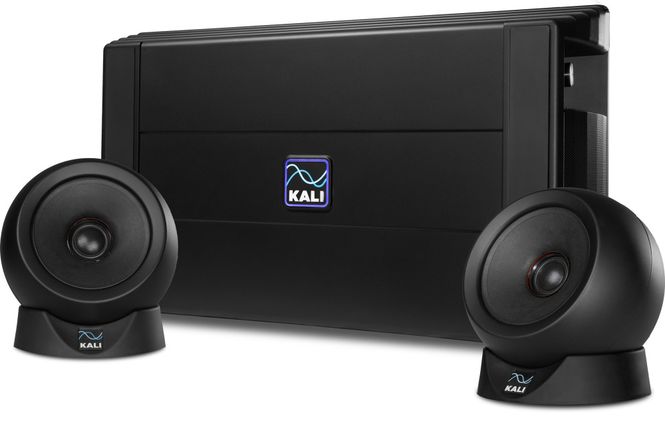
Kali Audio IN-UNF 3-veis studio monitor system. To satelitter og subwoofer. IN-UNF er eit 3-vegs, ”full-range”, studiohøyttalersystem som er designet for små rom der man enten på grunn av romakustikk eller naboers toleranse må holde volumet nede. IN-UNF gir deg referenselyd av høgste kvalitet og godt med ”headroom” på en armlengdes avstand. Systemet består av en bassenhet og to satelitter. Bassenheten anvender to stk. 4,5-tommer element, og satelittene anvender samme mellomregister/tweeter-enhet som finnes i Kalis hyllede IN-5 og IN-8 studiomonitorer. USB, optisk, 3,5 mm og balanserte Jack innganger. Hele systemet får plass på skrivbordet og gir samme full-range, uforvrengt lytteopplevelse omtrent som et par IN-8 på standard lytteavstand. Fleksibelt og enkelt. Bassenheten kan plaseres vertikalt f.eks bak en laptop eller skjerm, eller horisontalt f.eks som monitorbase for en skjerm. Kali Audio’s IN-UNF  is an ultra-nearfield desktop studio monitor system. It’s designed to be used in small spaces where the ability to get loud is limited, either by room acoustics or the tolerance of neighbors. The IN-UNF presents full-range audio at reference levels at .8 meters, or about arm’s length. The entire system sits on your desk, and provides the same full-range, low distortion listening experience as a pair of IN-8s at standard listening distance. Flexible setup options allow users to easily integrate the IN-UNF in their existing deskscape; the bass unit can be placed vertically to sit behind a laptop or display, or horizontally to be used as a monitor riser for a display. The IN-UNF consists of three main pieces: a bass unit and two satellites. The bass unit houses two high-excursion 4.5-Inch woofers as well as the amplifier and other electronics for the system. The two woofers are horizontally opposed, so no net vibration is transferred to the desk or to anything sitting on the bass unit. The two satellites use the same coaxial midrange and tweeter as Kali’s acclaimed IN-5 and IN-8 studio monitors. The architecture of this element has been praised for its excellent stereo imaging capabilities. At the close range of the IN-UNF, the intimacy and detail of the stereo image is unrivaled. You’ll hear a more engrossing, lifelike picture of your mix than you’ve ever heard before. The bass unit also features a variety of inputs to meet all your audio needs. Via the USB-C connector, which supports 24-bit resolution and 48k sample rate, you can connect computers, phones, and tablets without the need for an outboard interface or DAC. Optical and 3.5mm inputs provide support for both digital and analog connection to consumer devices like game consoles and receivers. For connection to standard pro audio devices, stereo TRS inputs are provided. The IN-UNF is uniquely tuned for its role as a desktop speaker. The desk is accounted for as an acoustic element of the system, solving some of the problems that are typically presented with putting speakers on a desk. DIP switches are provided to account for the position of the system in a room, and for you to dial in bass, mids, and treble to your preferences. The IN-UNF is part of Kali’s 2nd Wave product family, utilizing low noise-floor technology, upgraded drivers, and an advanced limiter circuit to maximize output and fidelity while keeping noise to a minimum. Specs: - Powered:Yes - Amplifier Class: D - Power Configuration: 2-Channel, Each Channel Bi-amped - HF/Midrange Power Per Channel 60 W - LF Power Per Channel 100 W - LF Driver: 4.5-Inch Long-Excursion Woofer - Mid-Range Driver: 4-Inch Optimized Profile Paper - HF Driver:  1-Inch Textile Dome - Frequency Response: (-10 dB) 39 Hz - 25 kHz - LF to Mid-Range Crossover:  280 Hz - Mid-Range to HF Crossover: 2800 Hz - SPL: 85 dB Continuous at .8 Meters with 20 dB Headroom - Max SPL: 103 dB Stereo Inputs - USB-C (Digital) - Optical (Digital) - 3.5mm (Unbalanced, -10 dBV) - TRS (Balanced, +4 dBU) In the box: - IN-UNF Bass/Input Unit - 2 x Midrange/HF Satellites - 2 x Satellite Stands - Power Cable - USB-A to USB-C Cable - Quickstart/Setup Guide
Kali Audio LP-6 V2 Aktiv ...

2.340,-

LP-6 V2 Black Studiomonitor 6". Svart Versjon 2 av suksessmonitoren Kali LP6. Studiomonitor med 6,5’’ basselement og 1’’ Soft Dome-diskant. 80W (40+40) Klasse-D forsterker. LP6 V2 er og forbedret med 12db lavere egenstøy (self noice) og input er øket med 3db. EQ'en i nye LP6 V2 er og forbedret. Svart finish. Project Lone Pine Studio Monitors Version 2 The new LP-6 V2 is part of Kali’s 2nd Wave of loudspeakers. 2nd Wave products draw on 3 years of R&D for across-the-board improvements. A new amplifier platform allows for 12 dB less self noise, while input sensitivity has been increased by 3 dB. The tuning has been refined for smoother HF response, and the boundary EQs have been updated to reflect common real-world use cases. Physical improvements include lighter transducer cones for better transient response and upgraded cabinet construction for greater reliability.   Transparent Sound The Lone Pine Series is designed to allow you to hear every detail that's happening in your mix. This starts with an exceptionally accurate frequency response. Whatever is present on your mix is what you'll hear in these monitors. Nothing is boosted or suppressed to cover flaws or try to sound more pleasing. With the LP-6 and LP-8, you can mix with more confidence, and you can also be assured that your mix will translate as best as possible to whatever systems your audience is using. 3-D Imaging Waveguide The waveguide on Project Lone Pine monitors allows you to hear spatial details and a soundstage that is wider, taller, and deeper than the space between the speakers themselves. High dynamic range, low distortion The dual layer, large diameter voice coil on the LP-Series helps keep the sound clear and free of distortion. Low noise port tube The LP-6 and LP-8 both have the clean, punchy bass of a front-ported speaker with very low noise from the port tube. High Output At continuous reference-level output, the LP-Series monitors have at least 20 dB headroom at the listening position. The LP-6 has enough output for most 1-2 person setups, and LP-8 can handle larger setups easily. Ample headroom ensures that even loud mixes with high dynamic range will come through clearly.   Bass Power  Bass on the LP-Series monitors is delivered by larger magnets and larger voice coils than any comparable speakers on the market. This gives you more accurate bass response that extends lower, so you can dial in exactly the low end sound you need.  Boundary EQ Control A speaker's given position in a space can drastically change it's frequency response. A speaker placed against a wall or on a desk will sound very different than a speaker placed on a stand, even in a well-treated space. Hard surfaces like walls, desk tops, and recording consoles can change the low end frequency response of the monitor, and degrade the overall clarity of the sound. Happily, most of the common positions are fairly predictable and easily corrected.  Kali's team did our Boundary EQ tuning at The Village Studios in Los Angeles, and came up with boundary compensation EQ settings to help you get the optimum sound for where you need to put your speakers. Combined with the LF and HF trims, this will ensure that the speakers sound their best no matter what room you're mixing in, or where the speakers are placed. Easy Connections The LP-6 and LP-8 both feature balanced XLR and TRS inputs, and an unbalanced RCA input. The RCA input can be set to -10 dBu sensitivity when you're using consumer devices like a laptop or smartphone's headphone jack.  Class D Power The integrated Class D Power amp delivers clean, reliable power that's optimized to this speaker. Both models use 40W for the 1" soft dome tweeter. The LP-6 uses 40W for the 6.5-Inch woofer, and the LP-8 uses 60W for the 8-Inch woofer. - Aktiv 2-väg - 80W (40+40) Class-D förstärkare - 6,5" baselement - 1" Soft Dome-diskant - Frekvensåtergivning (-10 dB): 39 Hz - 25 kHz - Frekvensomfång (± 3 dB): 47 Hz - 21 kHz - Delningsfrekvens: 1,5 kHz - Max SPL: 112 dB - Obalanserad ingångar: 1x RCA - Balanserade ingångar: 1x TRS och 1x XLR - TRS/XLR ingångskänslighet: +4 dB - RCA ingångskänslighet: -10 dB - HF Trim: -2 dB, ±0 dB, +2 dB - LF Trim: -2 dB, ±0 dB, +2 dB
Kali Audio LP-6 V2 W Aktiv ...

2.340,-

LP-6 V2 White Studiomonitor 6". Hvit Versjon 2 av suksessmonitoren Kali LP6. Studiomonitor med 6,5’’ basselement og 1’’ Soft Dome-diskant. 80W (40+40) Klasse-D forsterker. LP6 V2 er og forbedret med 12db lavere egenstøy (self noice) og input er øket med 3db. EQ'en i nye LP6 V2 er og forbedret. Hvit finish. Project Lone Pine Studio Monitors Version 2 The new LP-6 V2 is part of Kali’s 2nd Wave of loudspeakers. 2nd Wave products draw on 3 years of R&D for across-the-board improvements. A new amplifier platform allows for 12 dB less self noise, while input sensitivity has been increased by 3 dB. The tuning has been refined for smoother HF response, and the boundary EQs have been updated to reflect common real-world use cases. Physical improvements include lighter transducer cones for better transient response and upgraded cabinet construction for greater reliability.   Transparent Sound The Lone Pine Series is designed to allow you to hear every detail that's happening in your mix. This starts with an exceptionally accurate frequency response. Whatever is present on your mix is what you'll hear in these monitors. Nothing is boosted or suppressed to cover flaws or try to sound more pleasing. With the LP-6 and LP-8, you can mix with more confidence, and you can also be assured that your mix will translate as best as possible to whatever systems your audience is using. 3-D Imaging Waveguide The waveguide on Project Lone Pine monitors allows you to hear spatial details and a soundstage that is wider, taller, and deeper than the space between the speakers themselves. High dynamic range, low distortion The dual layer, large diameter voice coil on the LP-Series helps keep the sound clear and free of distortion. Low noise port tube The LP-6 and LP-8 both have the clean, punchy bass of a front-ported speaker with very low noise from the port tube. High Output At continuous reference-level output, the LP-Series monitors have at least 20 dB headroom at the listening position. The LP-6 has enough output for most 1-2 person setups, and LP-8 can handle larger setups easily. Ample headroom ensures that even loud mixes with high dynamic range will come through clearly.   Bass Power  Bass on the LP-Series monitors is delivered by larger magnets and larger voice coils than any comparable speakers on the market. This gives you more accurate bass response that extends lower, so you can dial in exactly the low end sound you need.  Boundary EQ Control A speaker's given position in a space can drastically change it's frequency response. A speaker placed against a wall or on a desk will sound very different than a speaker placed on a stand, even in a well-treated space. Hard surfaces like walls, desk tops, and recording consoles can change the low end frequency response of the monitor, and degrade the overall clarity of the sound. Happily, most of the common positions are fairly predictable and easily corrected.  Kali's team did our Boundary EQ tuning at The Village Studios in Los Angeles, and came up with boundary compensation EQ settings to help you get the optimum sound for where you need to put your speakers. Combined with the LF and HF trims, this will ensure that the speakers sound their best no matter what room you're mixing in, or where the speakers are placed. Easy Connections The LP-6 and LP-8 both feature balanced XLR and TRS inputs, and an unbalanced RCA input. The RCA input can be set to -10 dBu sensitivity when you're using consumer devices like a laptop or smartphone's headphone jack.  Class D Power The integrated Class D Power amp delivers clean, reliable power that's optimized to this speaker. Both models use 40W for the 1" soft dome tweeter. The LP-6 uses 40W for the 6.5-Inch woofer, and the LP-8 uses 60W for the 8-Inch woofer. - Aktiv 2-väg - 80W (40+40) Class-D förstärkare - 6,5" baselement - 1" Soft Dome-diskant - Frekvensåtergivning (-10 dB): 39 Hz - 25 kHz - Frekvensomfång (± 3 dB): 47 Hz - 21 kHz - Delningsfrekvens: 1,5 kHz - Max SPL: 112 dB - Obalanserad ingångar: 1x RCA - Balanserade ingångar: 1x TRS och 1x XLR - TRS/XLR ingångskänslighet: +4 dB - RCA ingångskänslighet: -10 dB - HF Trim: -2 dB, ±0 dB, +2 dB - LF Trim: -2 dB, ±0 dB, +2 dB
Kali Audio LP-8 V2 Aktiv ...

2.910,-

LP-8 V2 Black Versjon 2 av suksessmonitoren Kali LP8. Studiomonitor med 8’’ basselement og 1’’ Soft Dome-diskant. 80W (40+40) Klasse-D forsterker. LP6 V2 er og forbedret med 12db lavere egenstøy (self noice) og input er øket med 3db. EQ'en i nye LP6 V2 er og forbedret. Svart finish. Project Lone Pine Studio Monitors Version 2   The new LP-8 V2 is part of Kali’s 2nd Wave of loudspeakers. 2nd Wave products draw on 3 years of R&D for across-the-board improvements. A new amplifier platform allows for 12 dB less self noise, while input sensitivity has been increased by 3 dB. The tuning has been refined for smoother HF response, and the boundary EQs have been updated to reflect common real-world use cases. Physical improvements include lighter transducer cones for better transient response and upgraded cabinet construction for greater reliability.   Transparent Sound The Lone Pine Series is designed to allow you to hear every detail that's happening in your mix. This starts with an exceptionally accurate frequency response. Whatever is present on your mix is what you'll hear in these monitors. Nothing is boosted or suppressed to cover flaws or try to sound more pleasing. With the LP-6 V2 and LP-8 V2, you can mix with more confidence, and you can also be assured that your mix will translate as best as possible to whatever systems your audience is using.   3-D Imaging Waveguide The waveguide on Project Lone Pine monitors allows you to hear spatial details and a soundstage that is wider, taller, and deeper than the space between the speakers themselves.   High dynamic range, low distortion The dual layer, large diameter voice coil on the LP-Series helps keep the sound clear and free of distortion.   Low noise port tube The LP-6 V2 and LP-8 V2 both have the clean, punchy bass of a front-ported speaker with very low noise from the port tube.   High Output At continuous reference-level output, the LP-Series monitors have at least 20 dB headroom at the listening position. The LP-6 has enough output for most 1-2 person setups, and LP-8 can handle larger setups easily. Ample headroom ensures that even loud mixes with high dynamic range will come through clearly.   Bass Power  Bass on the LP-Series monitors is delivered by larger magnets and larger voice coils than any comparable speakers on the market. This gives you more accurate bass response that extends lower, so you can dial in exactly the low end sound you need.    Boundary EQ Control A speaker's given position in a space can drastically change it's frequency response. A speaker placed against a wall or on a desk will sound very different than a speaker placed on a stand, even in a well-treated space. Hard surfaces like walls, desk tops, and recording consoles can change the low end frequency response of the monitor, and degrade the overall clarity of the sound. Happily, most of the common positions are fairly predictable and easily corrected.  Kali's team did our Boundary EQ tuning at The Village Studios in Los Angeles, and came up with boundary compensation EQ settings to help you get the optimum sound for where you need to put your speakers. Combined with the LF and HF trims, this will ensure that the speakers sound their best no matter what room you're mixing in, or where the speakers are placed.   Easy Connections The LP-6 V2 and LP-8 V2 both feature balanced XLR and TRS inputs, and an unbalanced RCA input. The RCA input can be set to -10 dBu sensitivity when you're using consumer devices like a laptop or smartphone's headphone jack.    Class D Power The integrated Class D Power amp delivers clean, reliable power that's optimized to this speaker. Both models use 40W for the 1" soft dome tweeter. The LP-6 uses 40W for the 6.5-Inch woofer, and the LP-8 V2 uses 60W for the 8-Inch woofer.   - Aktiv 2-väg - 100W (60+40) Class-D förstärkare - 8" baselement - 1" Soft Dome-diskant - Frekvensåtergivning (-10 dB): 37 Hz - 25 kHz - Frekvensomfång (± 3 dB): 45 Hz - 21 kHz - Delningsfrekvens: 1,8 kHz - Max SPL: 114 dB - Obalanserad ingångar: 1x RCA - Balanserade ingångar: 1x TRS och 1x XLR - TRS/XLR ingångskänslighet: +4 dB - RCA ingångskänslighet: -10 dB - HF Trim: -2 dB, ±0 dB, +2 dB - LF Trim: -2 dB, ±0 dB, +2 dB
KRK RoKIT RP5 G5 Aktiv ...

2.199,-

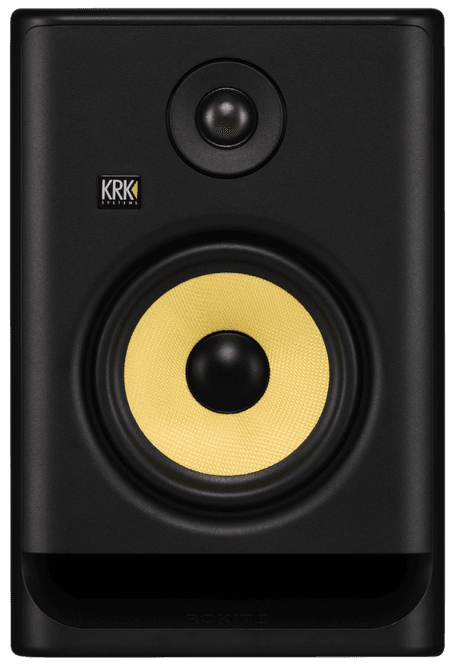
KRK ROKIT RP5G5 5" Powered Near-Field Studio Monitor 3 VOICING MODES: MIX - FOCUS - CREATE 25 BOUNDARY AND TUNING EQs: Tune for studio acoustic conditions NEW KRK TRANSDUCER DESIGNS: Optimized for improved response and accuracy BI-AMP CLASS D AMPLIFICATION: Power and headroom for excellent dynamics reproduction Elevate your audio production to new heights with KRK Systems' Rokit Generation Five product line that caters to the diverse needs of musicians, producers, and sound engineers worldwide. Whether you're working on a chart-topping hit, a film score, or a personal project, KRK Systems Rokit Generation Five monitors provide the tools you need to capture every nuance of your sound with astonishing clarity. Rokit Generation Five has three very useful voicing modes. Mix Mode, with flat frequency and phase response, is best for mixing, mastering, and critical listening. Create Mode is a more inspirational voicing best used for writing, producing, and casual listening. Focus Mode is a mid-focused voicing for critical analysis of the midrange band where vocals and most instruments have the most energy. They feature 25 boundary and tuning EQ combinations that help minimize and correct problems in your acoustic environment and woven Kevlar® aramid fiber cone woofers for superior damping and modal breakup control. The tweeters benefit from a highly damped acoustic silk dome diaphragm to smoothly extend the frequency range up to 40 kHz. For maximum transient response and dynamics reproduction, bi-amplified Class D power amplifiers drive the transducers evenly and more efficiently at reduced operating temperatures to ensure audio integrity during long work sessions.   Configuration 2-Way Bass Reflex System Type Active Studio Monitor Low-Frequency Driver Woofer, 5-inch, woven Kevlar® aramid fiber cone, ferrite magnet High-Frequency Driver Tweeter, 1-inch, Silk Dome, Copper Cap, ferrite magnet Frequency Response (+/- 3 dB) 54 Hz - 30 kHz Frequency Range (+3/-10 dB) 43 Hz - 40 kHz Crossover Frequency 2.27 kHz Amplifier Configuration Bi-amplified (Class D) HF Amp Power Output* 20 Watts LF Amp Power Output* 35 Watts Total Power* 55 Watts Total Dynamic Power Output** 130 Watts Max SPL*** 104 dB Coverage Angles**** 155° Horizontal × 126° Vertical Analog Input Connector Balanced XLR / 1/4" TRS Combo Input Impedance 5.12k0 Balanced SNR (Signal to Noise Ratio) >101.5 dB (Low Sensitivity setting, balanced), >94 dB (High Sensitivity, unbalanced) AC Input Voltage 100 - 240VAC (+/- 10%), 50/60 Hz Fuse Type 5x20 mm T1A 250V Enclosure Construction PVC Vinyl Wrapped MDF Baffle Construction Structurally Reinforced High Impact Polystyrene Product Dimensions (H x W x D) 11.34" (288 mm) x 7.52" (191 mm) x 9.53" (242 mm) Packaged Dimensions (H x W x D) 15.75" (400 mm) × 10.24" (260 mm) x 12.6" (320 mm) Product Weight 10.91 lbs. (4.95 Kg.) Packaged Weight 14.33 lbs. (6.5 Kg.) Optional Accessories KRKSTDX68W1 Mounting Bracket and KRKSTDX4A1 35 mm Mounting Adapter Rated Amplifier Power Output is measured at 1% THD+N ** Rated Dynamic Power Output is measured as instantaneous peak power at 10% THD+N *** Max SPL is calculated as a function of the driver sensitivity (1W @ 1M) and the Dynamic Power rating *** Coverage Angles are averaged -6 dB down points from 900 Hz to 9 kHz
KRK RoKIT RP7 G5 Aktiv ...

2.999,-

KRK ROKIT RP7G5 7" Powered Near-Field Studio Monitor 3 VOICING MODES: MIX - FOCUS - CREATE 25 BOUNDARY AND TUNING EQS: Tune for studio acoustic conditions NEW KRK TRANSDUCER DESIGNS: Optimized for improved response and accuracy BI- AMP CLASS D AMPLIFICATION: Power and headroom for excellent dynamics reproduction Elevate your audio production to new heights with KRK Systems' Rokit Generation Five product line that caters to the diverse needs of musicians, producers, and sound engineers worldwide. Whether you're working on a chart-topping hit, a film score, or a personal project, KRK Systems Rokit Generation Five monitors provide the tools you need to capture every nuance of your sound with astonishing clarity. Rokit Generation Five has three very useful voicing modes. Mix Mode, with flat frequency and phase response, is best for mixing, mastering, and critical listening. Create Mode is more inspirational voicing best used for writing, producing, and casual listening. Focus Mode is a mid-focused voicing for critical analysis of the midrange band where vocals and most instruments have the most energy. They feature 25 boundary and tuning EQ combinations that help minimize and correct problems in your acoustic environment and woven Kevlar® aramid fiber cone woofers for superior damping and modal breakup control. The tweeters benefit from a highly damped acoustic silk dome diaphragm to smoothly extend the frequency range up to 40 kHz. For maximum transient response and dynamics reproduction, bi-amplified Class D power amplifiers drive the transducers evenly and more efficiently at reduced operating temperatures to ensure audio integrity during long work sessions. Configuration 2-Way Bass Reflex System Type Active Studio Monitor Low-Frequency Driver Woofer, 7-inch, woven Kevlar® aramid fiber cone, ferrite magnet High-Frequency Driver Tweeter, 1-inch, Silk Dome, Copper Cap, ferrite magnet Frequency Response (+/- 3 dB) 45 Hz - 36 kHz Frequency Range (+3/-10 dB) 36 Hz - 40 kHz Crossover Frequency 1.64 kHz Amplifier Configuration Bi-amplified (Class D) HF Amp Power Output* 48 Watts LF Amp Power Output* 97 Watts Total Power* 145 Watts Total Dynamic Power Output** 234 Watts Max SPL*** 110 dB Coverage Angles**** 155° Horizontal x133° Vertical Analog Input Connector Balanced XLR / 1/4" TRS Combo Input Impedance 5.12k0 Balanced SNR (Signal to Noise Ratio) >91.5 dB (Low Sensitivity setting, balanced), >89 dB (High Sensitivity, unbalanced) AC Input Voltage 100 - 240VAC (+/- 10%), 50/60 Hz Fuse Type 5x20 mm T1.6A 250V Enclosure Construction PVC Vinyl Wrapped MDF Baffle Construction Structurally Reinforced High Impact Polystyrene Product Dimensions (H x W x D) 13.35° (339 mm) x 8.86" (225 mm) x 11.42" (290 mm) Packaged Dimensions (H x W x D) 18.11° (460 mm) x 12.20" (310 mm) x 14.57" (370 mm) Product Weight 16.87 lbs. (7.65 Kg.) Packaged Weight 21.16 lbs. (9.6 Kg.) Optional Accessories KRKSTDX68W1 Mounting Bracket and KRKSTDX4A1 35 mm Mounting Adapter * Rated Amplifier Power Output is measured at 1% THD+N ** Rated Dynamic Power Output is measured as instantaneous peak power at 10% THD+N *** Max SPL is calculated as a function of the driver sensitivity (1W @ 1M) and the Dynamic Power rating *** Coverage Angles are averaged -6 dB down points from 900 Hz to 9 kHz
KRK RoKIT RP8 G5 Aktiv ...

3.799,-

KRK ROKIT RP8G5 8" Powered Near-Field Studio Monitor 3 VOICING MODES: MIX - FOCUS - CREATE 25 BOUNDARY AND TUNING EQS: Tune for studio acoustic conditions NEW KRK TRANSDUCER DESIGNS: Optimized for improved response and accuracy BI-AMP CLASS D AMPLIFICATION: Power and headroom for excellent dynamics reproduction Elevate your audio production to new heights with KRK Systems' Rokit Generation Five product line that caters to the diverse needs of musicians, producers, and sound engineers worldwide. Whether you're working on a chart-topping hit, a film score, or a personal project, KRK Systems Rokit Generation Five monitors provide the tools you need to capture every nuance of your sound with astonishing clarity. Rokit Generation Five has three very useful voicing modes. Mix Mode, with flat frequency and phase response, is best for mixing, mastering, and critical listening. Create Mode is a more inspirational voicing best used for writing, producing, and is casual listening. Focus Mode is a mid-focused voicing for critical analysis of the midrange band where vocals and most instruments have the most energy. They feature 25 boundary and tuning EQ combinations that help minimize and correct problems in your acoustic environment and woven Kevlar® aramid fiber cone woofers for superior damping and modal breakup control. The tweeters a benefit from a highly damped acoustic silk dome diaphragm to smoothly extend the frequency range up to 40 kHz. For maximum transient response and dynamics reproduction, bi-amplified Class D power amplifiers drive the transducers evenly and more efficiently at reduced operating temperatures to ensure audio integrity during long work sessions. Configuration 2-Way Bass Reflex System Type Active Studio Monitor Low-Frequency Driver Woofer, 8-inch, woven Kevlar® aramid fiber cone, ferrite magnet High-Frequency Driver Tweeter, 1-inch, Silk Dome, Copper Cap, ferrite magnet Frequency Response (+/- 3 dB) 42 Hz - 36 kHz Frequency Range (+3/-10 dB) 32 Hz - 40 kHz Crossover Frequency 1.64 kHz Amplifier Configuration Bi-amplified (Class D) HF Amp Power Output* 68 Watts LF Amp Power Output* 135 Watts Total Power* 203 Watts Total Dynamic Power Output** 312 Watts Max SPL*** 111 dB Coverage Angles**** 148 Horizontal x 125° Vertical Analog Input Connector Balanced XLR / 1/4'TRS Combo Input Impedance 5.12kQ Balanced SNR (Signal to Noise Ratio) >94 dB (Low Sensitivity setting, balanced), >91 dB (High Sensitivity, unbalanced) AC Input Voltage 100 - 240VAC (+/- 10%), 50/60 Hz Fuse Type 5x20 mm T2A 250V Enclosure Construction PVC Vinyl Wrapped MDF Baffle Construction Structurally Reinforced High Impact Polystyrene Product Dimensions (H x W x D) 15.75" (400 mm) × 10.47" (266 mm) x 12.56" (319 mm) Packaged Dimensions (H x W x D) 20.47" (520 mm) x 13.78" (350 mm) x 15.35" (390 mm) Product Weight 23.04 lbs. (10.45 Kg.) Packaged Weight 28.66 lbs. (13 Kg.) Optional Accessories KRKSTDX68W1 Mounting Bracket and KRKSTDX4A1 35 mm Mounting Adapter * Rated Amplifier Power Output is measured at % THD+N * Rated Dynamic Power Output is measured as instantaneous peak power at 10% THD+N *** Max SPL is calculated as a function of the driver sensitivity (1W @ 1M) and the Dynamic Power rating *** Coverage Angles are averaged -6 dB down points from 900 Hz to 9 kHz
Viser 16 til 27 (av 27 produkter)
  • vipps-orange.png
  • klarna-light.png
  • mastercard-full.png
  • visa.png